Last updated November 23, 2026
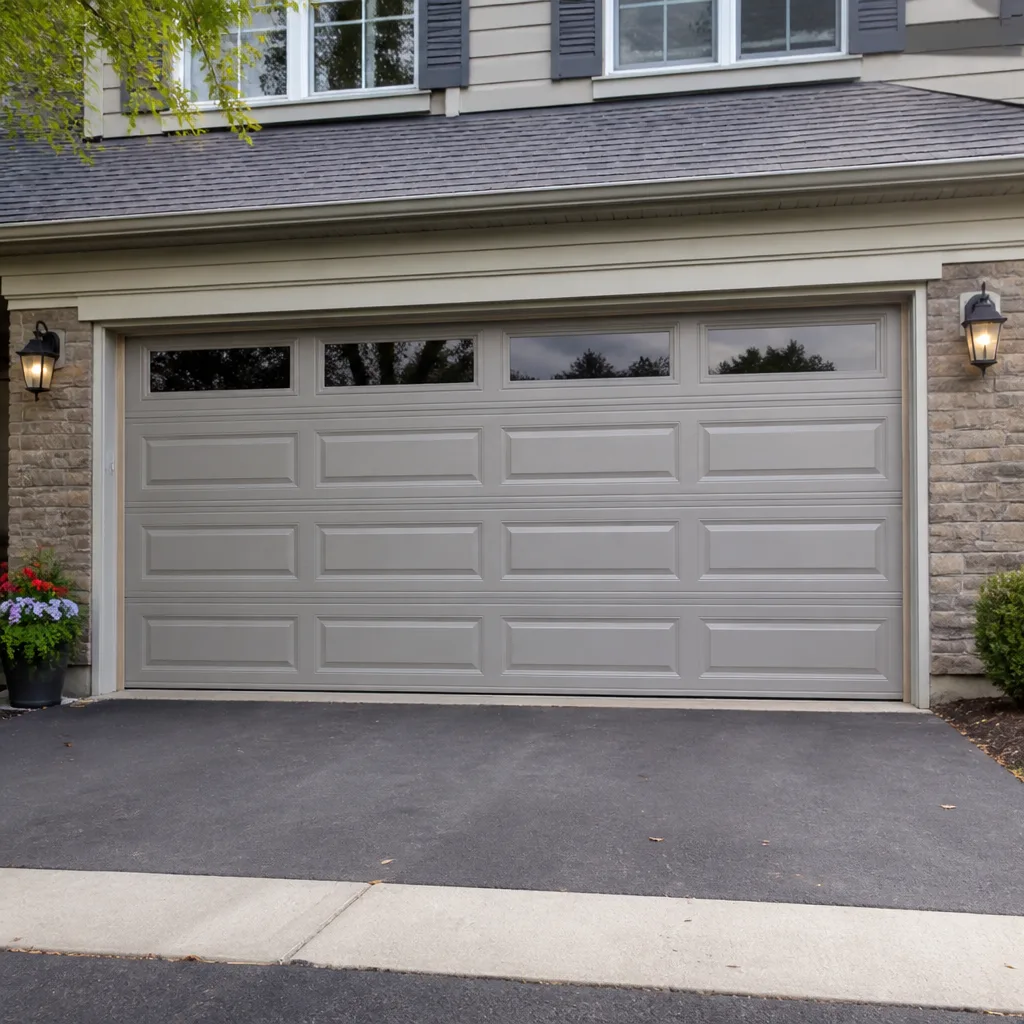 Raised-panel steel
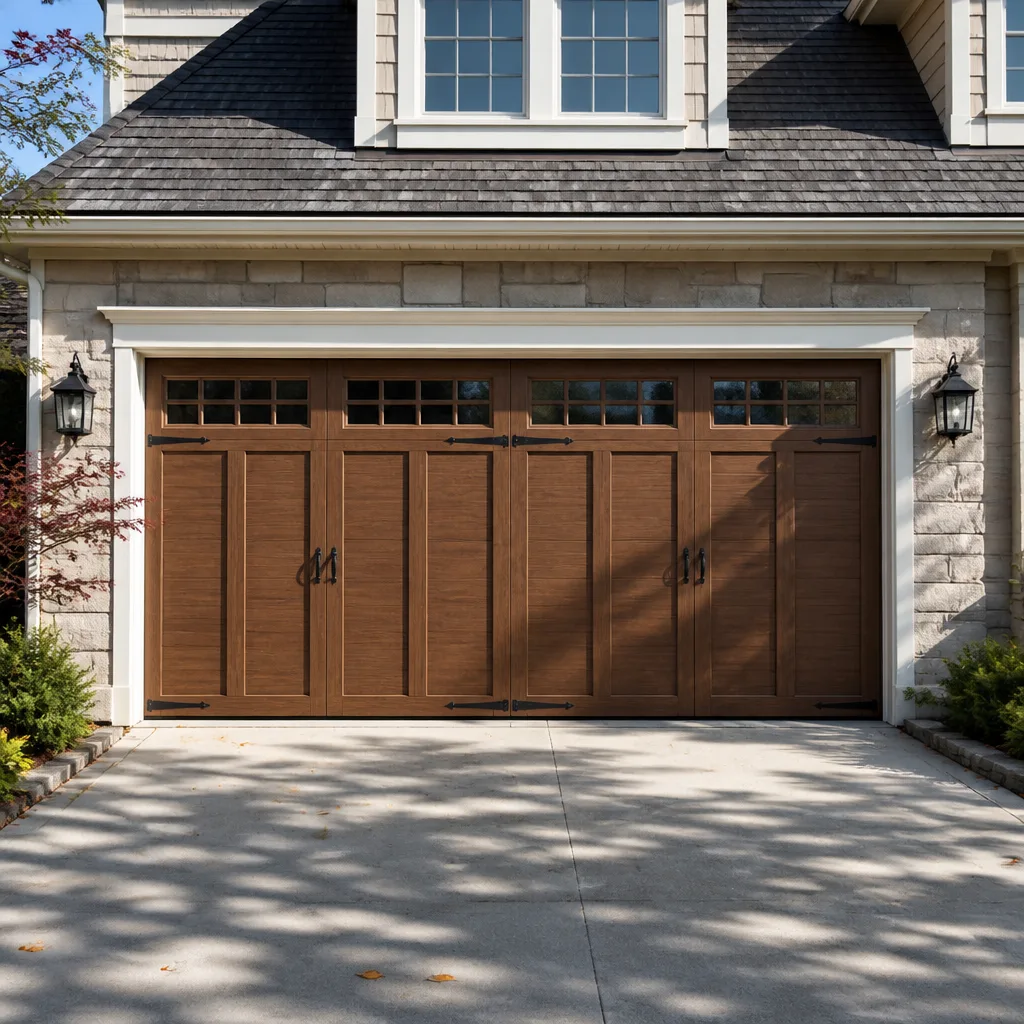 Carriage house
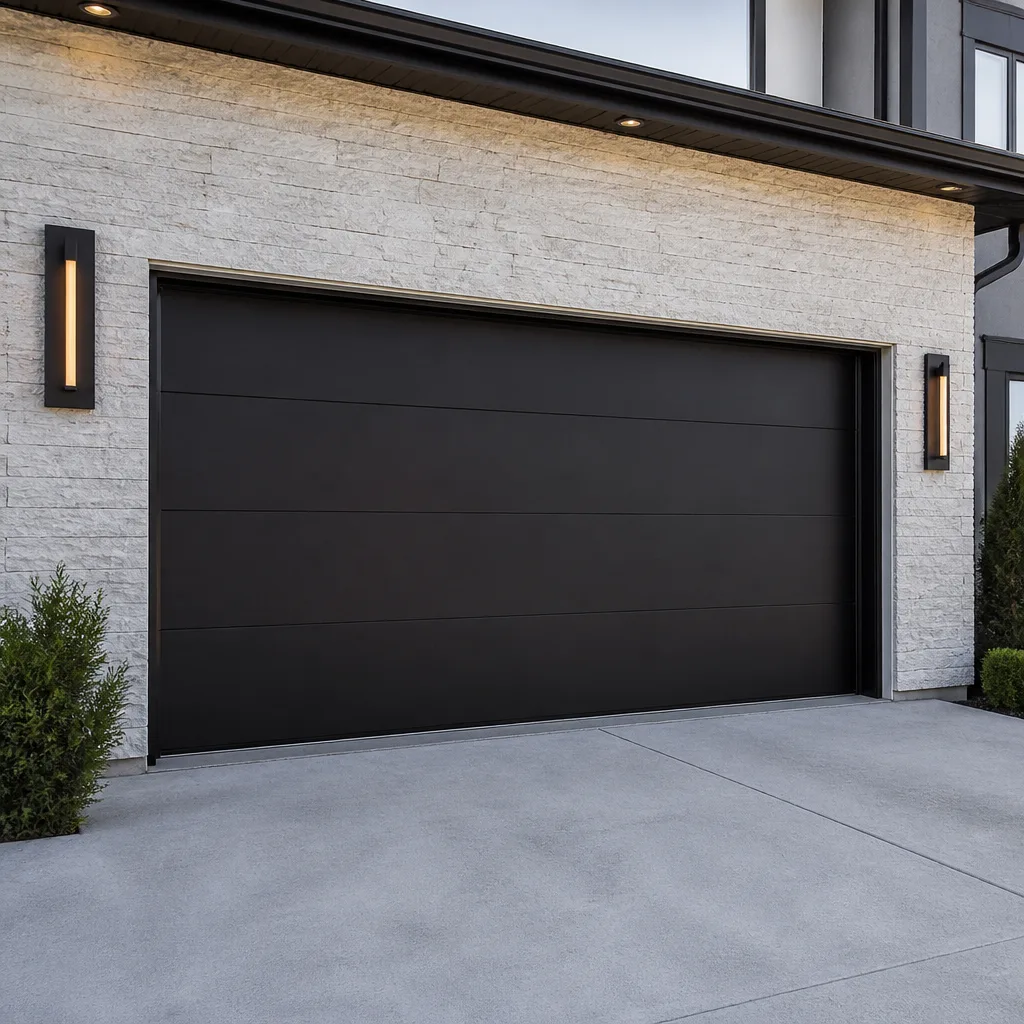 Modern flush
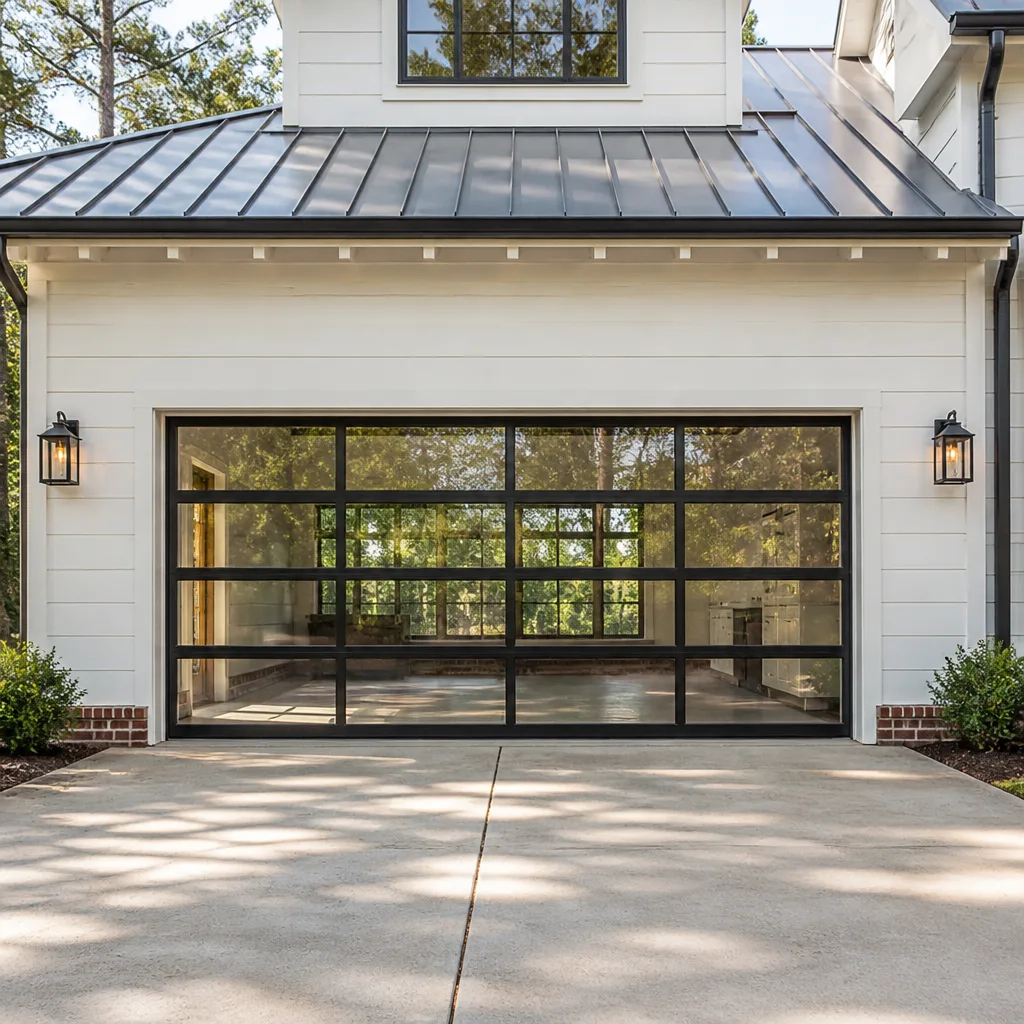 Full-view glass
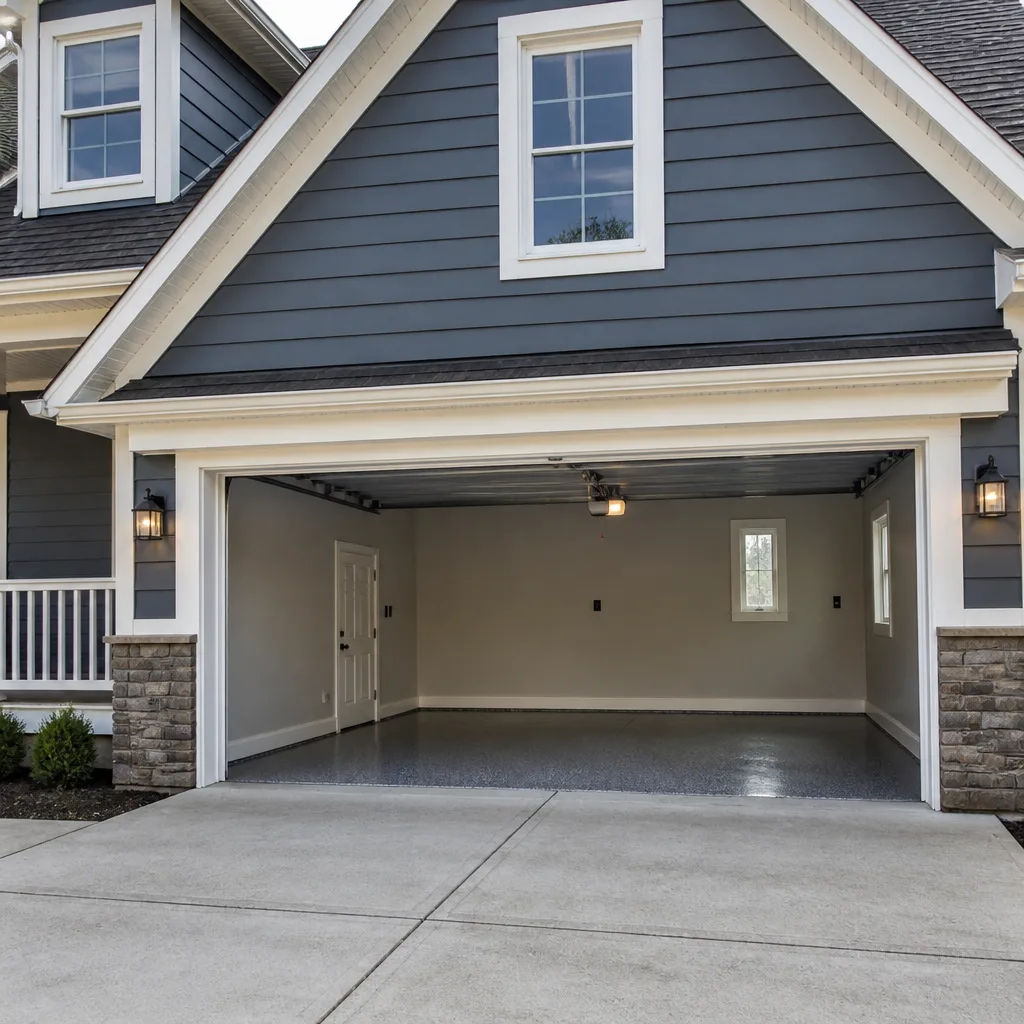 LiftMaster openers
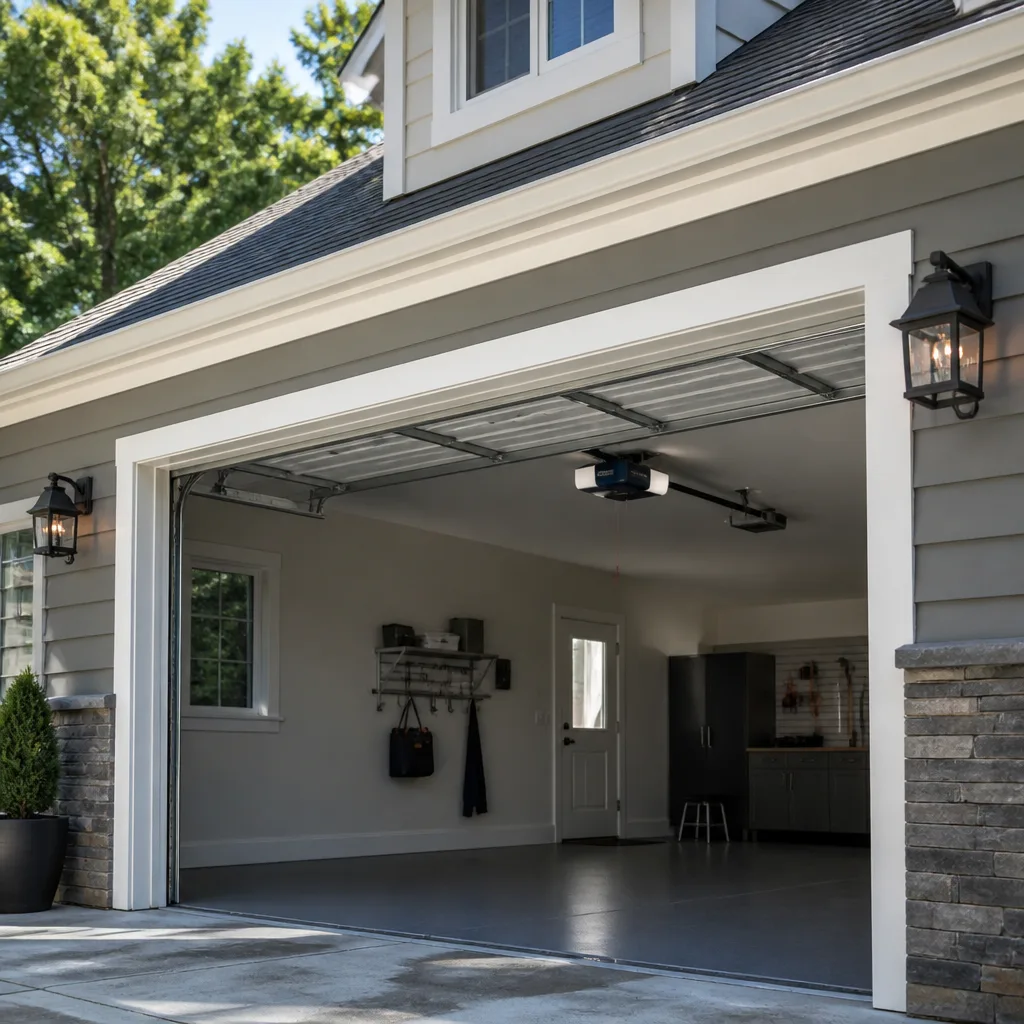 Chamberlain openers
Full 25-point door and opener safety check with every visit - springs, cables, rollers, tracks, and your LiftMaster or Chamberlain opener included
You get a price before we start. It does not change when the pro arrives.
Get your free estimateChoosing the Right Garage Door Brand: A Buyer’s Guide for Waldorf
That showroom door with the gleaming finish and the premium name on the tag? It was probably chosen in a climate nothing like yours. A door specced for a dry, mild region can warp, rust at the seams, and chew through bottom seals faster once it lives through Waldorf’s humid summers and freeze-thaw winters. No amount of brand prestige fixes a spec mismatch. This guide is about the specs that actually matter: steel gauge, insulation value, warranty language, local parts availability, and whether the door fits the house it’s bolted to. By the end you’ll know how to read a product line the way a technician does, and why the brand name on the box is the least important letter in the model number.
Quick Answer
There is no single best garage door brand for Waldorf. The right choice depends on matching steel gauge, insulation type, and door style to your home and climate, then confirming the warranty covers the parts that fail in humid weather. A good mid-grade door from a major manufacturer, installed correctly, will outperform a premium door with the wrong specs for your garage. Focus on construction and warranty terms first, and let the brand name follow.
Styles & brands we work with
- Raised-panel steel
- Carriage house
- Modern flush
- Full-view glass
- LiftMaster openers
- Chamberlain openers
Table of Contents
- Why Brand Names Matter Less Than You Think
- Steel Gauge: The Number That Predicts Dents and Rust
- Insulation R-Value: What Actually Matters for an Attached Garage
- Comparing Warranty Terms Across Major Brands
- Parts Availability: Why It Beats Prestige When Something Breaks
- Matching Door Style to Waldorf Neighborhoods
- How Humidity and Freeze-Thaw Affect Your Door Choice
- Brand-by-Brand Notes: Raynor, LiftMaster, Chamberlain, and Genie
- How to Evaluate a Dealer or Installer: A Step-by-Step Checklist
Why Brand Names Matter Less Than You Think
Walk into any big-box store and you’ll see three or four brand names splashed across the garage door aisle. What the signage doesn’t tell you is that most of these manufacturers build multiple product tiers under the same logo. A builder-grade door and a top-tier door can share a brand name and almost nothing else. The name on the box tells you who assembled it. The model number tells you what it’s made of, and that’s what determines how it holds up in Waldorf.
We work on doors from a wide range of manufacturers, so we’ve watched how different product lines age in this area’s weather. The pattern is consistent: the doors that last are the ones whose specifications matched the conditions where they were installed, not necessarily the ones with the most recognizable logo. A properly specced mid-grade door routinely outlasts an under-specced premium model sitting three doors down.
A few things to understand before you shop:
- Brand loyalty is a marketing construct. Manufacturers sell through dealers, distributors, and retail channels, and the same factory may build lines under more than one name.
- Specs transfer across brands. Steel gauge, coating process, insulation type, and section construction all appear on the spec sheet regardless of who makes the door.
- Installation quality can matter more than the product. A well-built door that’s poorly hung will bind, sag, and wear out its hardware early. A correctly installed door from a mid-tier brand can run quietly for years.
What this means in practice: don’t start with the brand. Start with the spec sheet, then confirm the brand has good local parts support. We’ll walk you through both below.
Steel Gauge: The Number That Predicts Dents and Rust
Steel gauge is the single most important number on a garage door spec sheet, and almost nobody asks about it. Lower gauge numbers mean thicker steel. A 24-gauge door is thinner than a 25-gauge, which is thinner than a 27-gauge. Most builder-grade doors sold in Waldorf are 24- or 25-gauge. The thicker 27-gauge doors cost a bit more upfront but resist dents and hold up better against humidity over time.
Here’s how gauge translates to real-world performance:
| Gauge | Typical Use | Dent Resistance | Finish Durability in Humidity |
|---|---|---|---|
| 24-gauge | Builder-grade, low-cost doors | Low – dents easily from bike hits, tool knocks, and cars nudging forward | Wears faster; rust can start at seams and edges within a few years if the coating fails |
| 25-gauge | Mid-grade, common in many Waldorf homes | Moderate – handles everyday wear but still vulnerable to heavier impacts | Holds up reasonably well if the factory finish is quality |
| 27-gauge | Premium residential doors | High – resists most household impact | Best long-term finish durability; less flex means fewer stress points where moisture gets in |
Why does gauge tie so directly to humidity? Because thinner steel flexes more. Every time the door opens and closes, a thin panel bends slightly at the seams and at the frame connection points. That flexing works the coating and sealants loose over time, and once moisture gets behind the finish, rust starts. In a humid climate like Waldorf’s, that process accelerates. A thicker-gauge door flexes less, so its finish and seals last longer.
Finish quality matters too, not just gauge. Look for a door with a factory-applied, baked-on finish rather than a field-painted one. The factory process bonds the coating more tightly to the steel, which matters more in an area where summer humidity can sit in the high range for weeks. If a spec sheet lists a galvanized or heavy zinc coating on the steel, that’s a good sign. It’s an extra layer of corrosion protection at the metal level, before any paint goes on.
One more thing to check: the bottom section of the door. That section takes the most abuse from road splash, sprinkler spray, and ground moisture. Ask whether the bottom section is the same gauge as the rest of the door or thinner. Some value-tier doors skimp on the bottom panel because it’s the least visible. That’s exactly where rust shows up first.
Insulation R-Value: What Actually Matters for an Attached Garage
Insulation is where garage door marketing gets loudest. You’ll see R-values from around 6 up to the high teens and beyond, with prices climbing along with them. The question Waldorf homeowners should ask is simpler: how much insulation value does your garage actually need?
For most attached garages in this area, a door in the middle of the range is the practical choice. Here’s the reasoning:
- An attached garage is a buffer zone, not living space. If your garage shares walls or a ceiling with the house, a moderately insulated door helps keep the garage from swinging to temperature extremes. That indirectly helps the rooms next to it, and it makes the garage more comfortable to walk through in January and August.
- You don’t need living-room insulation in a garage. A high R-value door is designed for garages that are heated, cooled, or converted into living or workspace. If your garage is a standard storage-and-parking space, the extra insulation value doesn’t earn back its cost.
- Insulation type affects more than R-value. Polyurethane foam cores are denser and generally quieter than polystyrene. If your garage sits under or next to bedrooms, the quieter door is often the better choice, even at the same R-value.
- Fit matters as much as the number. Insulation only helps if the door is properly hung with good weatherstripping at the sides, bottom, and top. A well-insulated door with poor seals leaks air and lets in moisture. The best R-value in the catalog won’t fix that.
In our experience, most attached garages around Waldorf perform well with a mid-range insulated door. You’ll pay less, and you won’t be paying for performance the space can’t use. Where higher insulation values make sense: garages that are heated, garages with living space directly above, and garages where someone works or exercises regularly. If your garage is none of those, spend the money on a thicker steel door instead. It’s the better investment in this climate.
If you’re thinking about anything that affects the whole door system, from the panels to the springs and opener, that’s where a walk-through with a technician helps. Our Waldorf Garage Door Repair Co team handles the whole assembly, so we can tell you what your garage actually needs instead of selling the biggest number on the spec sheet.
Comparing Warranty Terms Across Major Brands
Warranty language is where homeowners get the most confidence and the least clarity. Most major garage door manufacturers offer similar warranty structures, but the details vary, and the differences matter. Here’s the basic framework you’ll see across the industry:
- Limited lifetime warranties on door sections often cover defects in materials and workmanship, but usually on a prorated basis. The proration means the manufacturer’s coverage drops over time.
- Hardware and moving parts are often covered for shorter periods than the door itself: springs, hinges, rollers, and similar parts may fall under multi-year or limited lifetime terms depending on the model.
- Finish warranties are often separate and can be shorter. Some manufacturers prorate or exclude finish issues after a certain number of years, which matters more in humid climates where finish failures show up first.
- Labor is usually not covered. The manufacturer covers parts. Whoever installs the door covers the labor, typically for a shorter period, and only if you call them back.
| What It Covers | Typical Industry Terms | What to Check Before Buying |
|---|---|---|
| Door sections and material defects | Limited lifetime, often prorated | How does proration work? What’s the coverage after 5 or 10 years? |
| Finish and paint | Separate limited warranty, often shorter than section coverage | Does it exclude finish failures related to humidity or environmental conditions? |
| Hardware and springs | Multi-year limited coverage | Are springs included? Are torsion springs handled separately from extension springs? |
| Labor | Installer-backed, often shorter term | What’s the labor window, and is it from the installer or the manufacturer? |
The most common warranty trap is the exclusion. Many warranties exclude finish failures caused by environmental conditions, and humidity falls into that gray area. Read the fine print and ask the dealer directly whether finish problems in humid conditions are covered. Some lines are better than others here, and a knowledgeable local dealer can tell you which ones hold up.
Also understand what can void coverage: alterations after installation, painting over a factory finish without the manufacturer’s approval, improper installation, and sometimes failure to follow recommended maintenance. If you’re buying a door and want the warranty to actually be useful, keep your installation records and the original spec sheet. You’ll need them if you ever file a claim.
When a spring fails in year four, you want a technician who knows the system and can get the right replacement part without waiting on a phone tree. That’s part of why we handle garage door spring repair directly for the brands we service. Spring work is dangerous, and the right part matters as much as the right technique.
Parts Availability: Why It Beats Prestige When Something Breaks
Nobody thinks about parts availability while they’re shopping. Everyone thinks about it when the torsion spring snaps on a weekday morning. Here’s the reality: some brands have wider local distribution and easier access to replacement parts, and that translates directly into how fast a door gets fixed, how much the repair costs, and how long a homeowner sits with a door that won’t close.
What to look for when you’re evaluating a brand:
- Dealer network depth. Brands with a broad network of dealers and distributors usually mean parts are within easy reach. That’s one reason LiftMaster and Chamberlain opener support is everywhere: they’re distributed nationally and their parts are widely stocked.
- Standardized hardware. Doors that use standard hinge, roller, and spring configurations are easier to service because the parts are interchangeable and widely available.
- Opener parts that stay current. Opener technology moves faster than door technology. A brand that discontinues a remote or logic board model can leave a homeowner stuck. Look for manufacturers with a history of parts support and good documentation.
- Local knowledge matters too. A repair technician who knows your brand’s specific quirks will quote more accurately and complete the job in fewer visits. Familiarity is a real service advantage. If a company works on Raynor, Genie, LiftMaster, and Chamberlain systems every week, they can diagnose an opener issue without calling the manufacturer for a manual.
A practical example: a central opener logic board failure in a premium but less common line can mean a wait while the part is ordered, and the homeowner pays for time, not just parts. The same failure on a widely distributed opener line can often be resolved with a part that’s available locally. Same problem, different timeline and different bill.
This is one reason we work across major garage door and opener brands, including LiftMaster, Chamberlain, Genie, Raynor, Clopay, Amarr, Wayne Dalton, and Craftsman. Familiarity with the system already in the garage means we can diagnose it on the first visit more often. We dive deeper into that process in our page on garage door opener repair.
Matching Door Style to Waldorf Neighborhoods
Style is the part of shopping most homeowners are most confident about, and the part where overpaying is easiest. Here’s the thing: most homes in and around Waldorf have standard garage door openings. A standard opening doesn’t need a custom-built door to look great. It needs the right style, size, and material choice for the neighborhood’s architectural rhythm.
What you’ll see across Waldorf and surrounding communities:
- Traditional raised-panel doors dominate newer suburban developments. These are widely available, competitively priced, and easy to source. If your home sits in a neighborhood of similar homes, a raised-panel door in a color that matches the trim is almost always the right call.
- Colonial and transitional styles show up on older homes closer to town and in established neighborhoods. Carriage-house style doors with decorative hardware look right on these homes, and manufacturers like Clopay and Amarr offer these lines at accessible price points without custom charges.
- Modern and contemporary homes sometimes use flush-panel or full-view doors. Full-view aluminum and glass doors cost more and need careful insulation consideration, since glass panels affect thermal performance. If your home has this style, budget for it and spec insulation deliberately.
Two practical rules. First, don’t pay for custom aesthetics on a standard opening unless the look truly calls for it. Many premium door lines are just standard sizes with upgraded finishes and hardware. A mid-tier door with a good color match often gets the same curb-appeal result for less. Second, check whether your neighborhood or HOA has guidelines or architectural standards. Some communities near Waldorf and in Charles County have design review processes that dictate color or style for garage doors. Find out before you order. A return on a custom-ordered door is never cheap.
If your door has a serviceable underlying issue, like a failing spring or opener, fixing that is often smarter than replacing the whole door for style alone. We talk about that decision in our guide to garage door repair.
How Humidity and Freeze-Thaw Affect Your Door Choice
Waldorf’s climate isn’t extreme, but it’s not benign for garage doors either. Summers bring sustained high humidity. Winters bring freeze-thaw cycles, with moisture seeping into small gaps and expanding when it freezes. That combination is hard on a garage door’s finish, seals, and hardware, and it’s the reason an “okay” spec from a dry climate can be a poor spec here.
What to prioritize for this climate:
- Thicker steel gauge (25 or 27) for finish durability. Less flex means fewer cracks, fewer gaps, and less rust. Pay the difference here before you pay it anywhere else.
- A quality factory-applied finish. Baked-on finishes resist moisture better than field-painted doors. Look for a door sold with the finish already applied and cured.
- A properly sealing bottom section. The bottom seal takes the most ground moisture and surface water. Check that the bottom seal is durable and correctly sized, and that the bottom section of the door is galvanized or similarly protected.
- Good weatherstripping at the sides and top. Seals keep humid air out and water away from the door’s interior. Poor seals are a common failure point as doors age.
- Insulated sections that resist moisture absorption. Polyurethane foam cores don’t hold moisture the way some other materials can. In a humid climate, insulation performance depends as much on moisture resistance as on R-value.
One thing that isn’t covered under what people expect: hail. Hail is uncommon in Waldorf, so that’s not typically a deciding factor in door selection. More common is wind-blown debris, tree sap, and the gradual wear from humidity and freezing. Choose a door that handles those, not one marketed for a storm climate you don’t live in.
Opener selection matters in this climate as well: a door’s balance and the opener’s capacity work together. In a humid season, a heavier insulated door needs the right opener to move it smoothly. That’s why we match the whole system, door and opener together. We’ve seen what happens when they’re mismatched, and it shows up as premature wear on the opener.
Brand-by-Brand Notes: Raynor, LiftMaster, Chamberlain, and Genie
We work with a broad range of brands, so we can share patterns we see across the most common lines. Here’s what’s worth knowing about a few that come up often in and around Waldorf:
Raynor
Raynor is a garage door manufacturer with product lines that lean toward solid construction and dealer-based installation. Their doors are commonly found in established neighborhoods, and the models we see tend to be well-specced. When you’re evaluating a Raynor, focus on the gauge and finish specs for the model, and confirm the warranty details for your specific line. Raynor’s local availability varies, so ask about parts lead times if you’re considering a model that’s less common in the area.
LiftMaster
LiftMaster is probably the most widely deployed opener brand we see. Their systems are common, and their parts are widely available, which helps on repair timelines. LiftMaster also makes smart openers and remote systems, so if you’re shopping for an opener, ask whether the model fits your door’s weight and size. We service LiftMaster openers and recommend them often because they’re reliable and their parts are easy to reach when something fails.
Chamberlain
Chamberlain is closely related to LiftMaster in distribution and design philosophy, and their openers are widely installed. Chamberlain’s lineup includes smart features and remote-access technology. Their parts are typically available locally, which keeps repair timelines short. If you’re comparing Chamberlains, check whether the model supports the features you actually use, like smartphone control or battery backup.
Genie
Genie is another widely used opener brand with a long history. Their openers show up frequently in Waldorf-area homes, and their parts and accessories are generally available. Genie’s models vary in capacity, so match the opener to your door’s weight and size. We work with Genie systems as part of our standard opener service, so a Genie failure is usually something we can diagnose and repair without a special order.
The point of these notes is to reduce anxiety about brand compatibility: we work on the brand already in your garage, so you don’t need to match your repair needs to a specific brand or wonder if a technician will be unfamiliar with your system.
How to Evaluate a Dealer or Installer: A Step-by-Step Checklist
Once you’ve narrowed down your door options, the next decision is who installs and services them. That decision can affect your experience more than the brand name. Here’s a step-by-step process for evaluating an installer in Waldorf:
- Ask what brands they service, not just sell. A dealer that installs one brand and can’t service others may not be able to help when something goes wrong. A service-focused company that works across major brands can diagnose and repair what’s already in your garage, which is often the more useful relationship.
- Get the spec sheet in writing. Before you commit, ask for the exact model number, steel gauge, and insulation details. A written quote with specs protects you from getting a different door than you thought you were buying.
- Ask about warranty terms for both product and labor. Confirm the manufacturer’s warranty coverage and the installer’s labor terms separately. If there’s a service issue in year two, you want to know who will handle it and at what cost.
- Ask how they’ll handle spring and opener service later. A garage door is a system: door, springs, and opener. Ask whether the same company can service all three. That avoids the “call a second company” problem when something needs attention.
- Confirm what the written estimate covers. The written estimate should be the price you pay. Ask specifically whether removal of the old door, disposal, and any frame or trim work are included.
- Verify that they handle emergency scenarios. A door that fails and leaves a home unsecured or a car trapped is a different situation than a scheduled installation. Ask whether the company handles emergency garage door service, since some don’t.
One more check: ask about maintenance and weatherstripping as part of the installation. A good install includes proper sealing and a balance check. If those aren’t part of the plan, ask why.
Common Mistakes to Avoid
We’ve seen plenty of door-related problems that could have been avoided at the buying stage. Here are the mistakes that show up most often in Waldorf:
- Buying on brand alone. A recognizable name on a builder-grade door doesn’t guarantee quality. Always check the model number and specs before you commit. The brand tells you who built it. The gauge and materials tell you how it will hold up.
- Overspending on insulation value. Paying for high R-value in a garage that isn’t heated or cooled mostly wastes money. Match the insulation level to how you actually use the space, and put the savings into thicker steel instead.
- Ignoring warranty exclusions. Finish warranties often exclude environmental failures, including humidity-related ones. Ask specifically what voids coverage before you buy, and keep the paperwork.
- Skipping the bottom section check. The bottom of the door takes the most moisture and abuse. A thin bottom panel on an otherwise solid door will be where rust starts. Make sure the whole door is specced consistently.
- Assuming a custom opening. Most homes in Waldorf have standard sizes, and most standard sizes are stocked by major brands. If someone quotes a custom build without confirming your opening is genuinely non-standard, ask questions.
- Ordering before checking HOA guidelines. Some neighborhoods in Charles County have design standards for garage doors. A door that’s approved on paper but rejected by a review board is a costly mistake. Check first.
- Not planning for parts and service. A well-chosen door with no local service support is a problem waiting to happen. Ask about parts availability before you select a brand, especially for less common lines.
See the difference
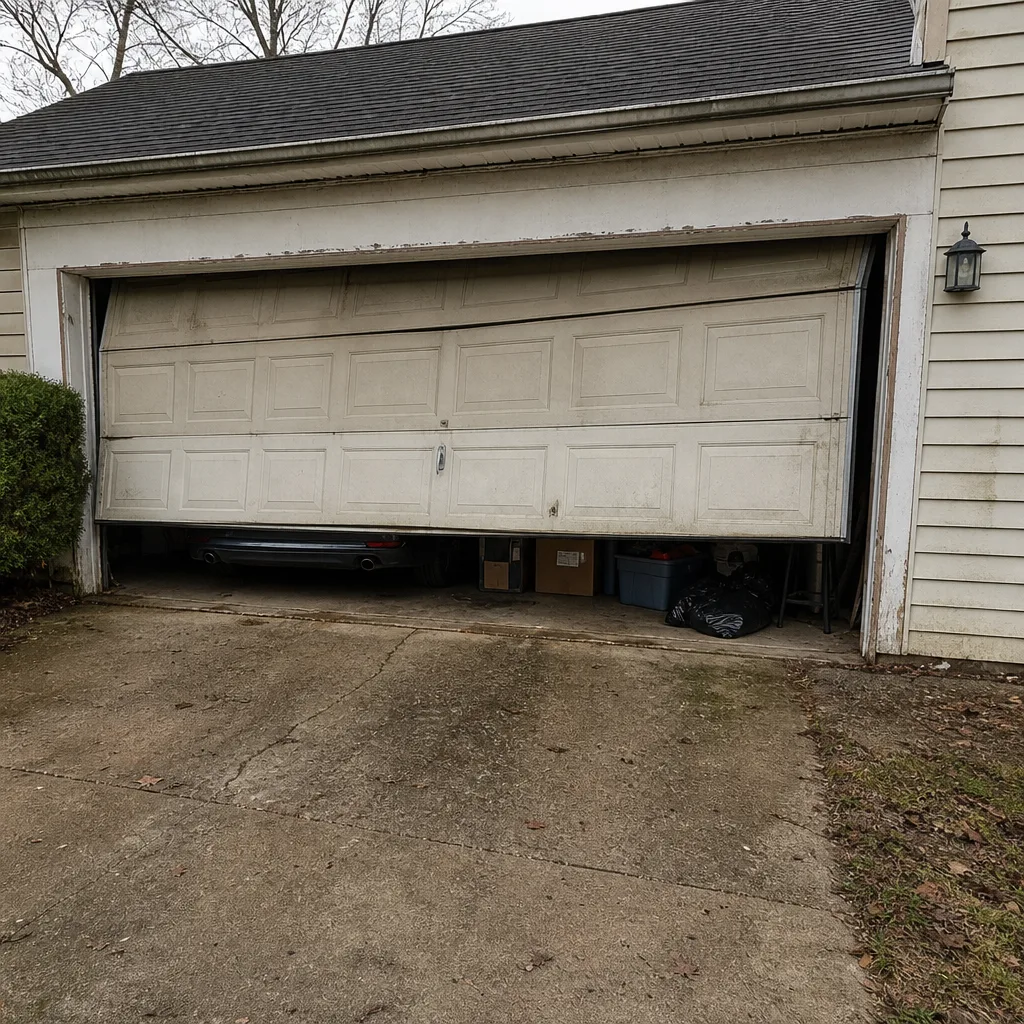 Before
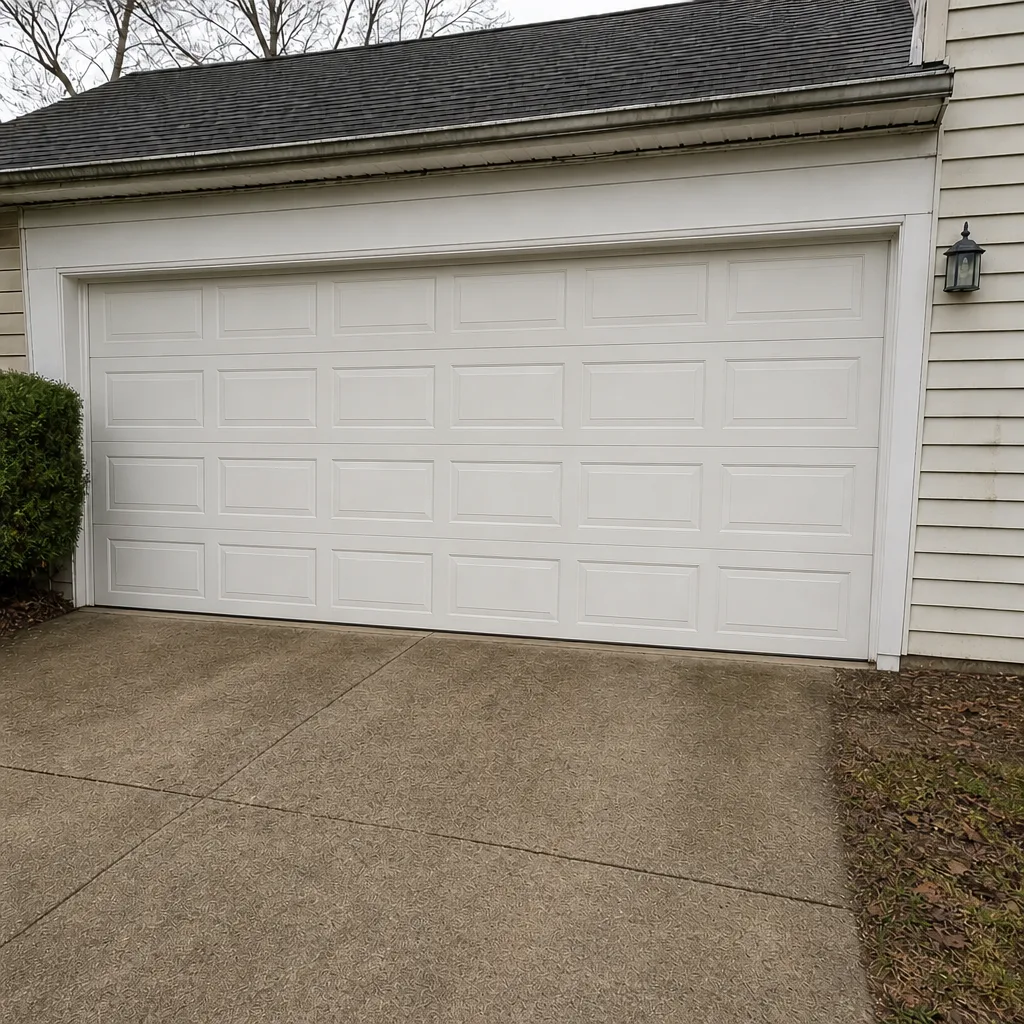 After
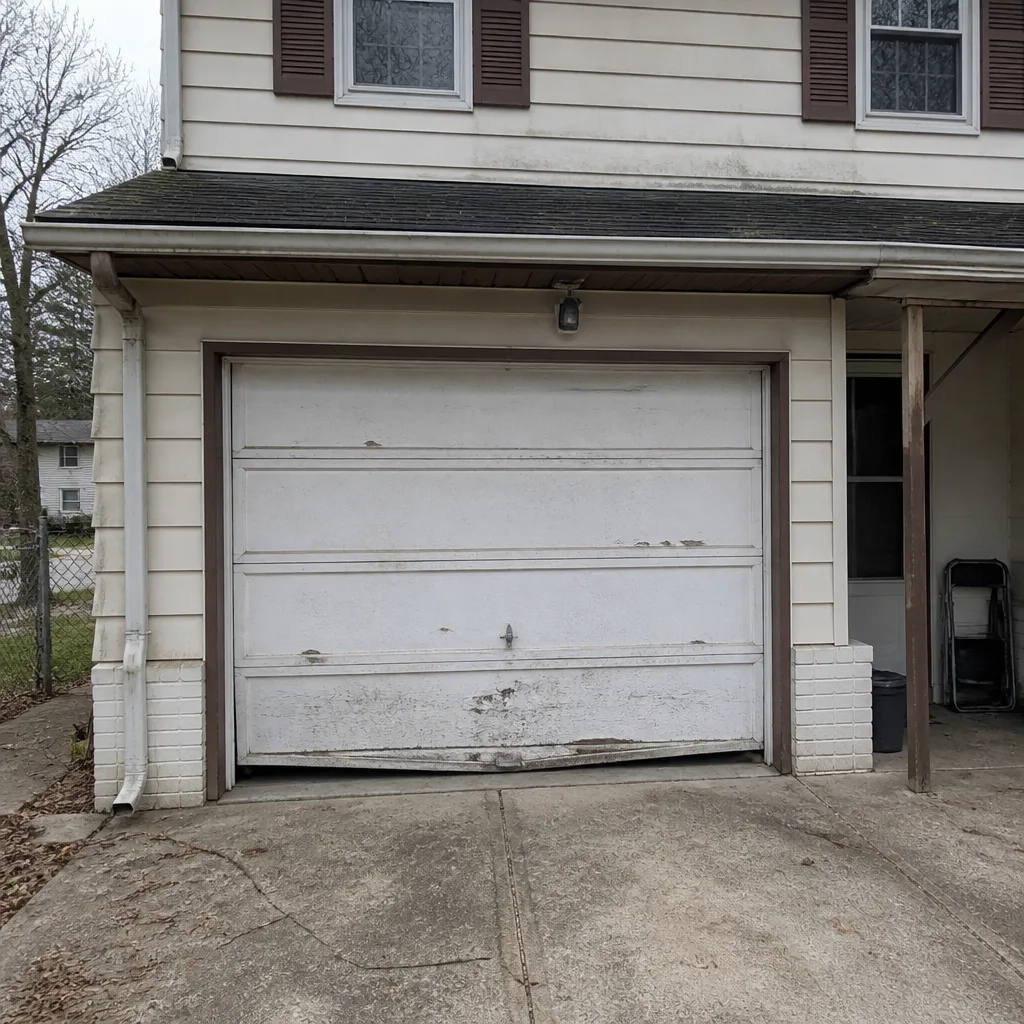 Before
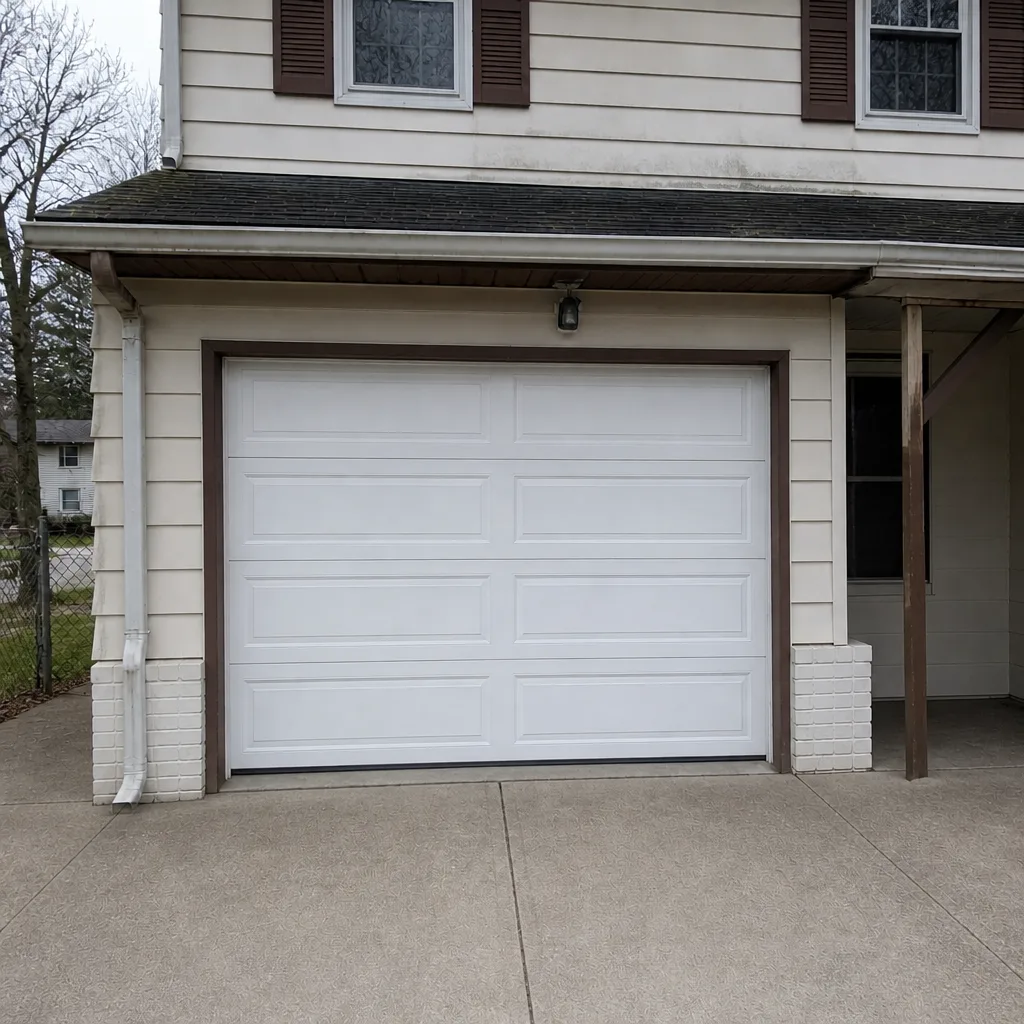 After
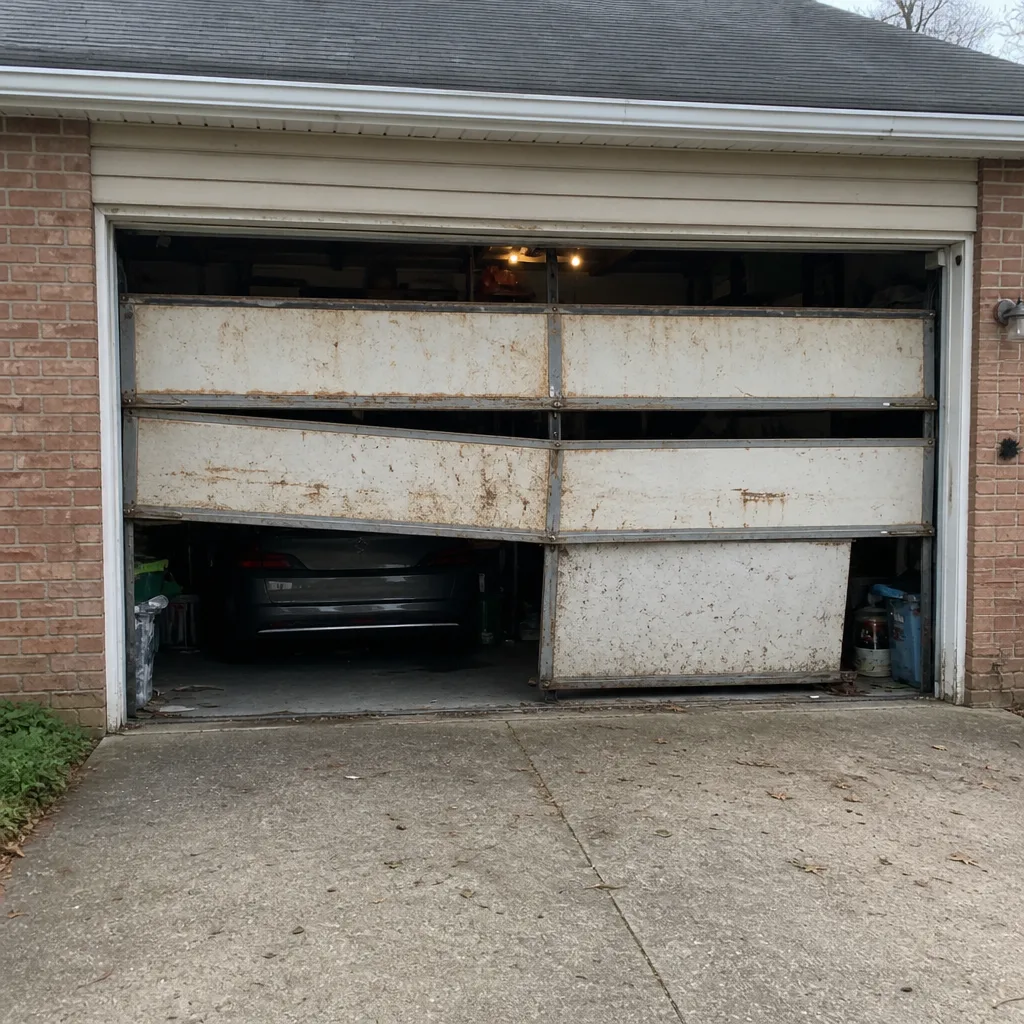 Before
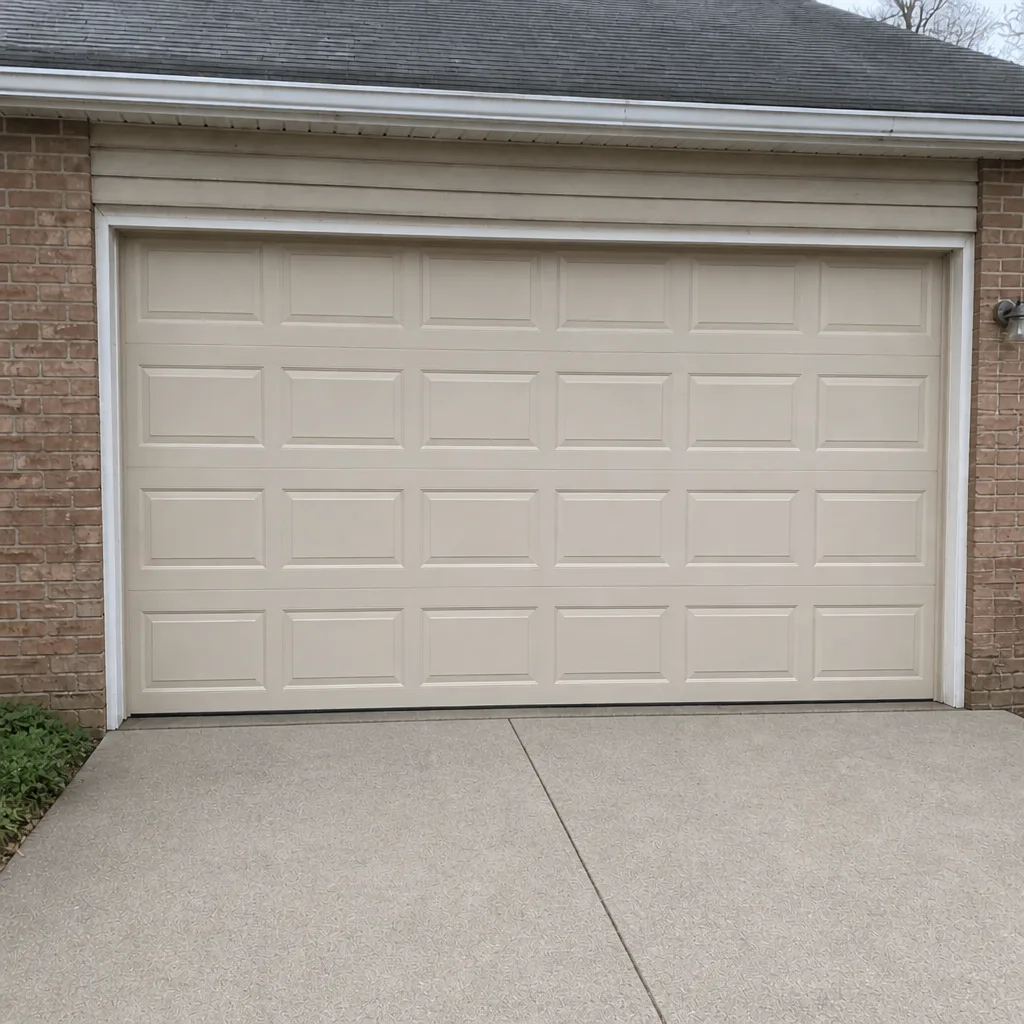 After
When to Call a Professional
Some driveway inspections and visual checks are fine for a homeowner. But garage door work isn’t a general handyman job, and some of it isn’t DIY at all. Call a professional when:
- A spring breaks or the door suddenly gets much heavier. Torsion springs and cables store enormous energy. The spring repair process requires specialized tools and training, and a mistake can cause serious injury. This is not a DIY job.
- The door is off its track or stuck partially open. A door that’s off the track can fall. Don’t try to force it back into place; call for service.
- The opener makes unusual noises or the door reverses unexpectedly. Opener failures can leave a door unable to close. Get it checked before the door fails completely.
- Your door is leaving a gap at the bottom or sides. Seal problems let in water and pests, and they usually trace to a specific cause worth diagnosing.
- You’re considering a full replacement. A technician can measure your opening, verify what specs your home actually needs, and give you a written estimate.
The bottom line is simple: if a spring, cable, or track is involved, don’t touch it. Trained technicians have the right tools and know the failure patterns. Waldorf Garage Door Repair Co offers free estimates in Waldorf. Call (855) 658-4231 to talk through what’s going on.
Frequently Asked Questions
There isn’t one best brand. What matters is matching specs to your home: steel gauge of 25 or 27, quality factory finish, appropriate insulation for how you use the garage, and good local parts support. The right door from a mid-tier brand will outperform the wrong door from a premium brand. We work across major brands and can help you compare the right specs for your garage. Call (855) 658-4231 for a free estimate.
It’s the minimum for a basic door, but it’s not the best choice for this climate. A 24-gauge door flexes more, which works the finish and seals loose faster in humid weather. If you can, step up to 25- or 27-gauge; it’s the best upgrade you can make for long-term finish durability. Call us if you want to talk through what’s appropriate for your garage and budget.
Costs vary by size, material, insulation, and installation, so we don’t give a single number. A free estimate based on your actual opening and the specs you choose is the right way to get an accurate price. The written estimate sets the final price, so there’s no surprise after the work begins. Call (855) 658-4231 for a free measure and written quote.
Yes, but the right level depends on use. Moderate insulation in an attached garage helps buffer temperature swings and makes the garage more comfortable, without paying for living-space-level R-value you don’t need. If your garage is heated or used as a workspace, higher insulation makes more sense. We can help you figure out what’s practical for your setup.
Finish warranties often exclude environmental conditions, and humidity-related failures fall into a gray area. That means a warranty that looks comprehensive may not actually cover the problem you’re most likely to encounter in Waldorf’s humidity. Read the exclusions and ask specifically about finish coverage before you buy. Call us if you want help reading a warranty or comparing brands.
Yes. We work on major garage door and opener brands including LiftMaster, Chamberlain, Genie, Clopay, Amarr, Wayne Dalton, Craftsman, and Raynor. That means we can diagnose what’s already there without a special order, so a repair doesn’t turn into a wait. If you’re unsure about your brand, call (855) 658-4231 and we’ll help you figure it out.
The Bottom Line
The brand name on a garage door is a starting point, not a verdict. The numbers that matter most are steel gauge, finish quality, insulation type, warranty coverage, and local parts availability, and those numbers are on the spec sheet no matter who builds the door. Match them to Waldorf’s humidity and freeze-thaw winters, and to how you actually use the garage. Buy the construction, not the marketing. And when a spring, track, or opener needs work, call someone who services the brand already in your garage and can get it fixed without sending you to a second company. That’s the approach that keeps you out of the “wish I’d checked” category.
If you’re weighing door options, comparing warranty terms, or dealing with a door that needs service now, Waldorf Garage Door Repair Co can help. We offer free estimates in Waldorf and handle repair, opener repair, spring repair, installation, and emergency service. Call (855) 658-4231 for a free estimate and to ask any questions about brands, specs, or what’s right for your garage.
Written by the team at Waldorf Garage Door Repair Co.