Last updated November 23, 2026
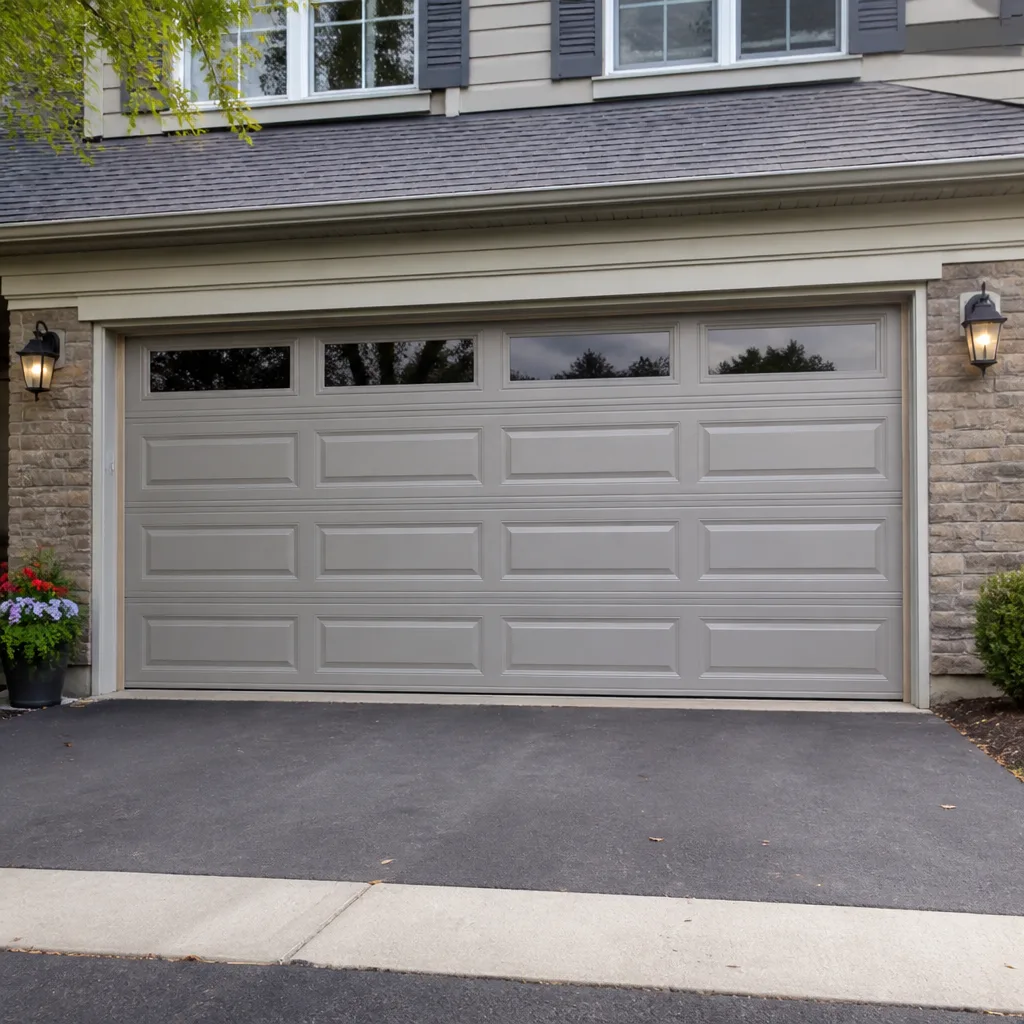 Raised-panel steel
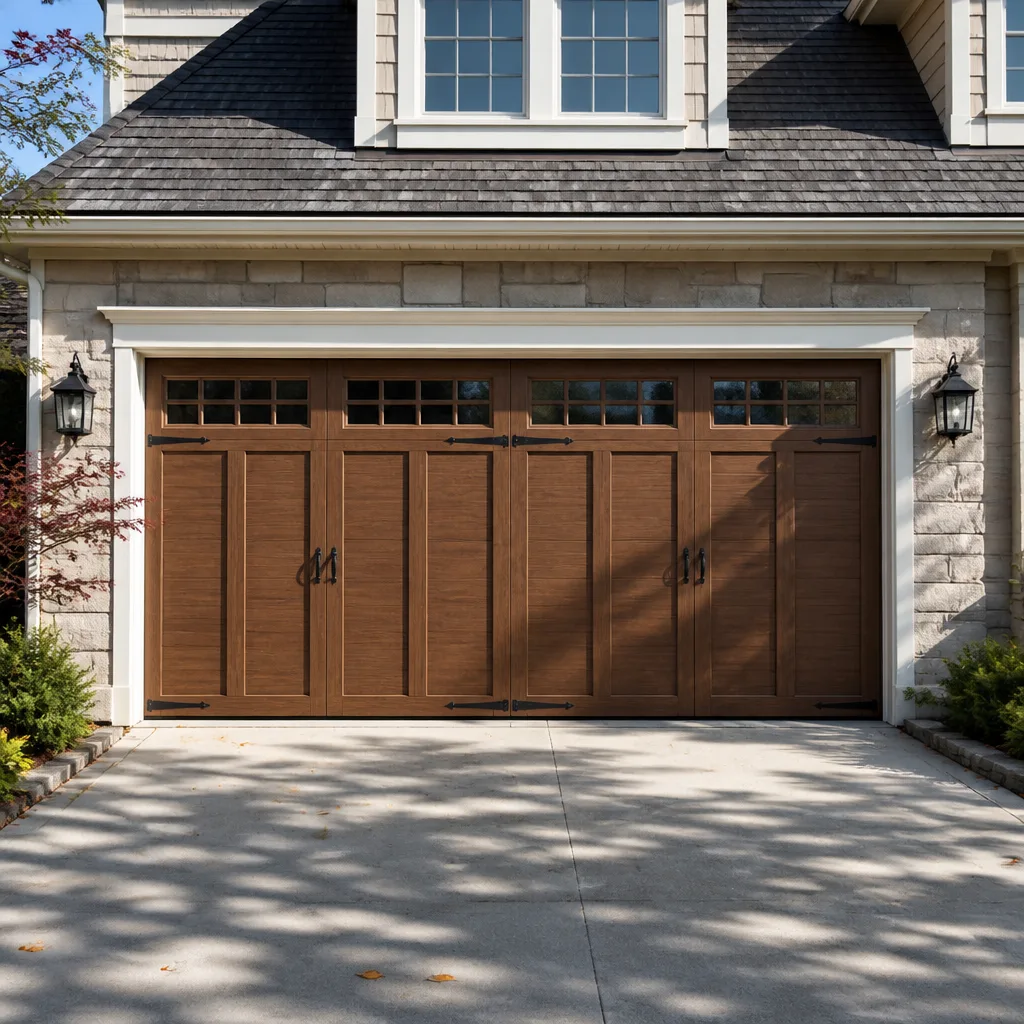 Carriage house
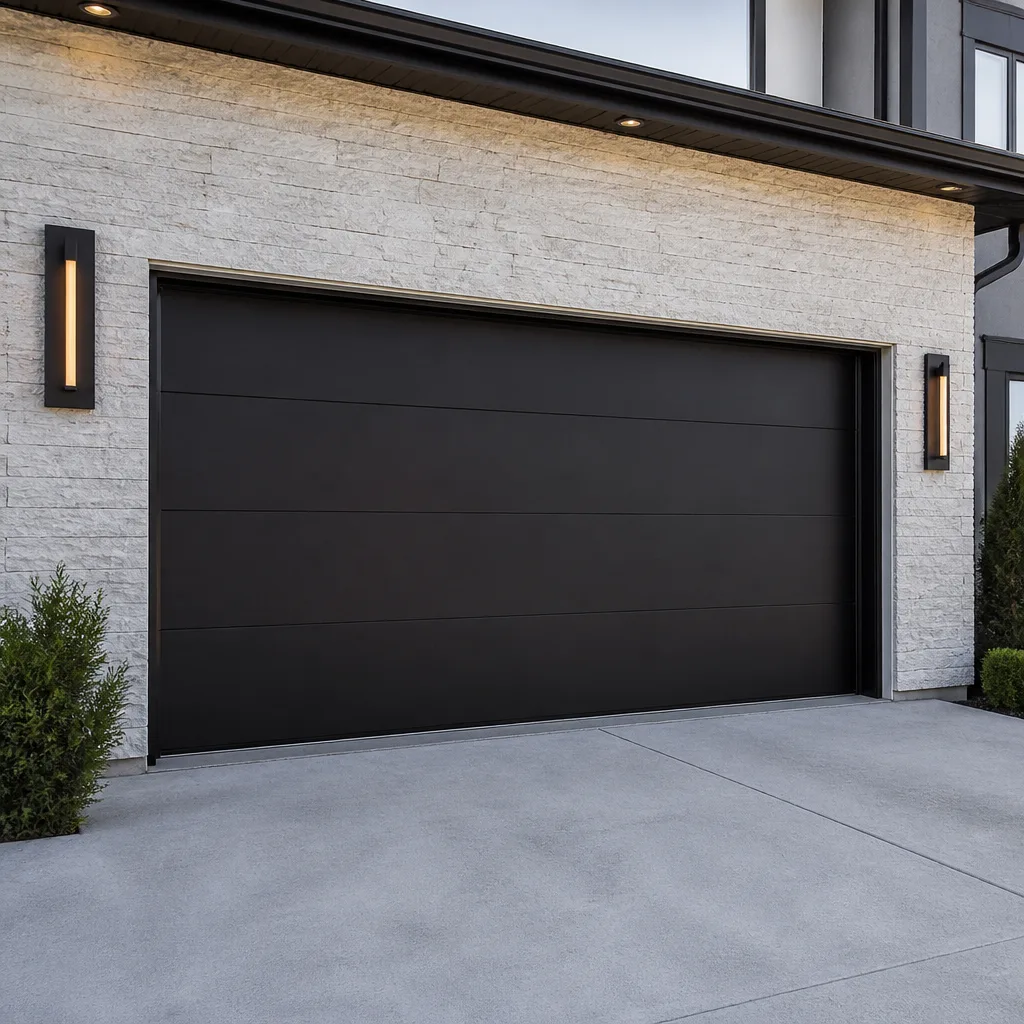 Modern flush
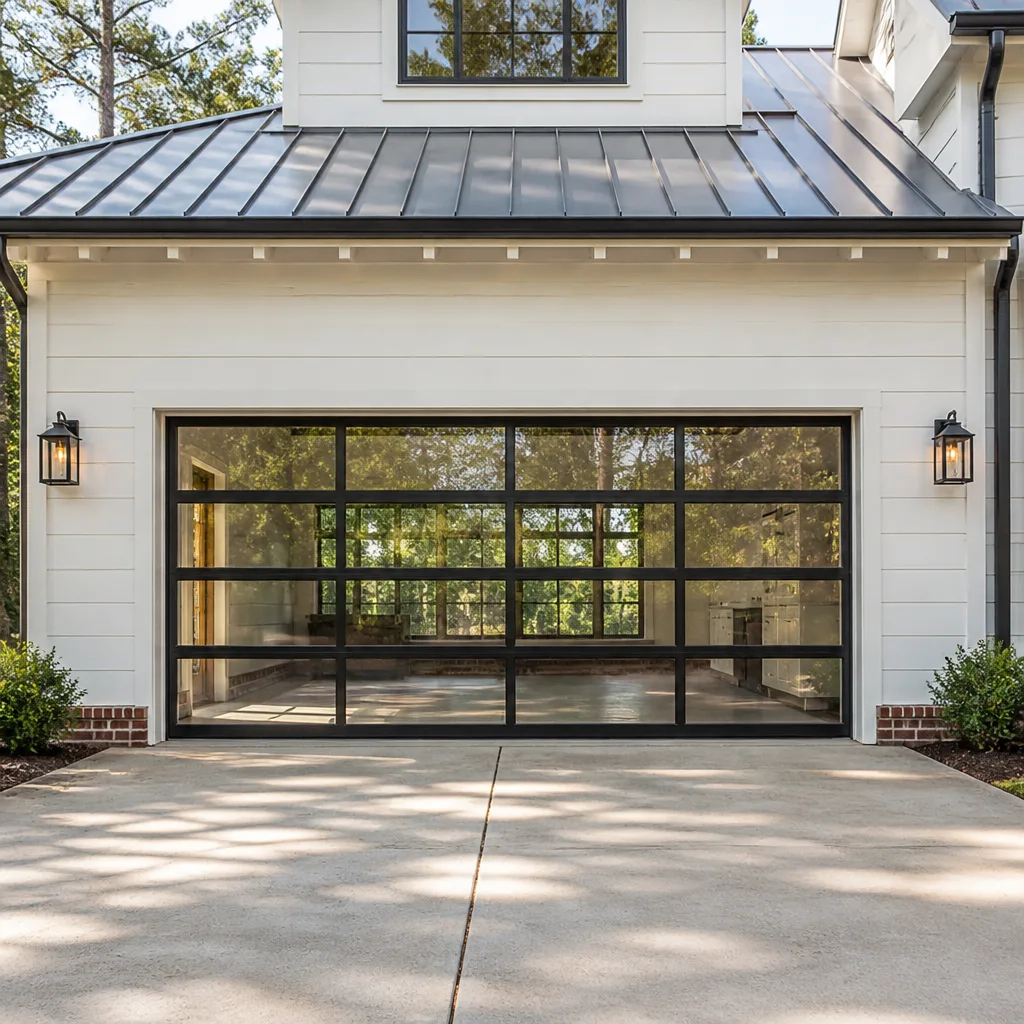 Full-view glass
 LiftMaster openers
 Chamberlain openers
Full 25-point door and opener safety check with every visit - springs, cables, rollers, tracks, and your LiftMaster or Chamberlain opener included
You get a price before we start. It does not change when the pro arrives.
Get your free estimateHow to Hire a Garage Door Contractor in Waldorf: A Step-by-Step Guide
Most homeowners hire a garage door contractor the same way they hire a plumber: they wait for something to break, search in a hurry, and pick whoever answers first. That approach works fine for a clogged drain. It’s a bad way to hire someone who will be working with high-tension springs and a 200-pound door hanging over the family car. Here’s the part nobody tells you up front: the contractor you choose should be checked at the state level before they touch anything, not after the invoice arrives. In this guide we’ll walk through exactly how to verify a Maryland license, spot a handyman pretending to be a garage door specialist, and protect yourself in writing when you hire in Waldorf.
Quick Answer
To hire a garage door contractor in Waldorf, verify the company’s Maryland Home Improvement Commission (MHIC) license number directly on the state’s lookup tool before signing anything, confirm they carry liability insurance and workers’ compensation, get a written contract with a fixed price and a parts warranty, and ask specific questions about spring systems to make sure the technician actually knows the work. A legitimate garage door contractor will hand over that information without hesitation. One who dodges it is telling you something important.
Styles & brands we work with
- Raised-panel steel
- Carriage house
- Modern flush
- Full-view glass
- LiftMaster openers
- Chamberlain openers
Table of Contents
- Why hiring the right garage door contractor in Waldorf matters
- How to verify a Maryland MHIC license in two minutes
- Garage door company vs. handyman: the liability difference
- The three contract clauses that protect you
- Red flags on after-hours and emergency calls
- Questions that reveal whether a technician really knows springs
- Step-by-step: the hiring process from start to finish
- What garage door work typically costs in Waldorf
Why hiring the right garage door contractor in Waldorf matters
A garage door is one of the few systems in a house that combines heavy moving parts, stored mechanical energy, and daily use by everyone in the household. That combination means small mistakes get expensive fast. A door that’s badly balanced wears out its opener prematurely. A spring that’s replaced with the wrong gauge fails early or damages the door’s torsion tube. And the person who made the mistake may be long gone by the time you notice.
Waldorf makes this more important than it might seem. The area sees real seasonal swings – hot, humid summers and cold snaps that work on metal, lubricant, and wood trim alike. Doors here cycle open and shut through all of it, and the hardware has to hold up. When a Charles County homeowner hires a generalist who doesn’t know the difference between a torsion and an extension system, the result is usually a door that works for a few weeks and then starts grinding, sagging, or refusing to close all the way.
We’ve seen plenty of these situations. Someone gets a spring replaced cheaply, then calls back three months later because the door operator is straining or the cables have slipped. The money saved on the first visit disappears in the second. Hiring right the first time is the cheapest option, even though it takes twenty extra minutes of checking.
How to verify a Maryland MHIC license in two minutes
Maryland requires home improvement contractors to hold a license through the Maryland Home Improvement Commission, which sits within the Maryland Department of Labor. Garage door installation, repair, and replacement all fall under home improvement work. A handyman who “does garage doors on the side” frequently does not have this license, and that matters because the license is your clearest proof that the person you’re paying has been vetted by the state.
Here’s how to check it, and it really does take about two minutes:
- Ask the contractor for their MHIC license number before any work is scheduled. A legitimate company gives it without hesitation.
- Go to the Maryland Department of Labor’s MHIC license lookup page (the commission runs its own search tool online).
- Enter the license number. You’ll see the business name, license status, expiration date, and any public complaints or disciplinary actions.
- Confirm the name on the license matches the name on the estimate and the contract. If they don’t match, ask why in writing.
- Check the expiration date. An expired license is not a license.
- Save a screenshot of the result for your records, especially if the job is significant.
That’s it. It costs nothing, and it filters out a surprising number of problems before they start. If a company refuses to give you a license number, or gives you a number that doesn’t turn up in the state database, that’s your answer. Move on to the next call. When you’re comparing candidates, our own team is happy to provide this information – it’s part of how we operate as a Waldorf Garage Door Repair Co.
Garage door company vs. handyman: the liability difference
On paper, the two look similar. Both show up, both take payment, both fix the door. In practice they carry completely different liability profiles, and the difference shows up the moment something goes wrong.
A licensed home improvement contractor in Maryland is required to carry liability insurance and workers’ compensation coverage. If a technician is injured in your garage, the contractor’s insurance handles it. If the door fails and damages your car or your home, the contractor’s liability coverage is there to respond. Those protections don’t exist when you hire an unlicensed individual.
The second problem is warranties. Garage door and opener manufacturers set installation and service standards for their products. When a certified company works on a Genie or Clopay system, the manufacturer’s warranty stays intact. When an unlicensed handyman improvises, the manufacturer has grounds to deny a warranty claim later – and you find that out at the exact moment you need coverage. That’s the point the thesis of this guide is making: bad workmanship is annoying, but voided warranties and no recourse is the real cost.
Third, capability. A handyman can swap a remote battery. But spring replacement, cable work, and torsion system repair require specific tools, torque, and technique. A generalist who tries to do it with hand tools usually leaves the door in a worse state than before. A full-service garage door company handles garage door repair across all of it and doesn’t refer you out for the hard parts.
The three contract clauses that protect you
Maryland’s MHIC rules require a written contract for most home improvement jobs above a certain threshold. Beyond the basics – price, scope, start date – three specific clauses are worth insisting on, and they’re the ones homeowners most often skip.
Clause 1: A written parts warranty with a defined period. If a spring, roller, hinge, or opener component fails within a stated window after the repair, the contractor replaces it. A 90-day parts warranty is a reasonable minimum. Get that in writing, with the exact parts covered spelled out. Vague promises like “we stand behind our work” don’t count.
Clause 2: A labor warranty separate from the parts warranty. Labor and parts are two different things. If the part holds up but the installation was wrong, the parts warranty alone won’t help. Ask for a stated labor window.
Clause 3: A clean scope and no add-ons without a signed change order. The contract should list exactly what’s being replaced or installed. Anything additional – a new strut, a different opener model, extra rollers – requires a written change order that you approve before the work continues. This is the clause that keeps a quote from ballooning once the door is off its track.
Read all three before you sign. Ask the contractor to explain any clause you don’t fully understand. A professional will walk you through it without irritation. That’s the mark of a company that expects the relationship to continue past one job.
Red flags on after-hours and emergency calls
Emergencies are when bad actors make their easiest money. A door off its track, a snapped spring, or an opener that fails on a Sunday leaves a house unsecured or a car trapped. The homeowner needs someone now, and that need narrows the decision space down to whoever answers.
A few specific things to watch for:
- No written quote before work begins. Some operations will begin disassembly and then quote based on the “discovery” after the door is already opened up. Legitimate work is quoted and agreed before anyone picks up a tool.
- Phone-shop pressure. Quoting a number over the phone with certainty sight-unseen, then raising it on arrival, is a classic pattern. Get the estimate in writing and confirm that the final price is the written price unless the scope changes.
- Unmarked vehicles and no paperwork. If the technician who arrives has no business card, no paperwork, and no company identification, that’s not a service call – it’s an informal transaction with no recourse.
- Cash-only insistence. Reputable companies accept standard payment methods. Cash-only demands after dark are a red flag.
- Someone you can’t look up later. The whole point of hiring a licensed contractor is that you can verify and, if needed, escalate. An unlicensed individual disappears after the invoice.
The good news is that emergency garage door service is a normal part of what a proper garage door contractor offers, not an upsell. You shouldn’t feel rushed into decisions you’d make differently in daylight. Our garage door repair service covers spring failures, off-track doors, and opener issues that can’t wait, and the same licensing, insurance, and contract standards apply after hours as during a scheduled call.
Questions that reveal whether a technician really knows springs
Anyone can say “yes, we do springs.” The right questions make that answer verifiable. Ask the following, and listen for how they respond – confident specifics versus vague reassurance.
- “Is my door torsion or extension spring?” A real technician will ask you to describe the hardware above the door and tell you in a sentence which system you have. Hesitation here is a problem.
- “Do you replace both springs when one fails?” Springs wear at roughly the same rate. Replacing one when the second is the same age usually means a repeat call. A professional explains this without pushing – the goal is to avoid a second failure, not to upsell.
- “What gauge spring will you use, and why?” Spring life is tied to wire gauge, inner diameter, and length. A competent answer names the gauge and ties it to your door’s weight and cycle count. Anything less is guesswork.
- “Will you check the door’s balance and alignment after the repair?” A spring replacement without a balance check is an incomplete job. If the door is even slightly off, the new spring wears prematurely.
- “Do you work on the opener I already have?” A technician comfortable across brands – Genie, LiftMaster, Chamberlain, and others – can diagnose the system instead of defaulting to a replacement.
- “What’s the failure mode you see most with a door like mine?” Experienced technicians have an answer. It’s not a trick question – it’s a diagnostic for how much time they’ve actually spent in the field.
In our experience, real spring questions are where the wheat and chaff separate. Senior technicians we work with bring up to 10 years of field experience. Spring work is garage door spring repair – torsion and extension systems carry serious injury risk, and it isn’t a job for improvisation. Someone comfortable talking about spring life and gauge is someone used to doing it right.
Step-by-step: the hiring process from start to finish
Here’s the whole process in one place, so you can work through it without second-guessing.
- Diagnose the problem yourself, roughly. Note what the door is doing – binding, jerking, refusing to close, making a new noise. Write it down. This helps you describe the problem clearly and recognize a mismatched diagnosis.
- Search for contractors, not handymen. Search for “garage door repair Waldorf” or “garage door spring repair near me.” The results will mix real specialists in with generalists. Read the service list – if “garage doors” is one small checkbox among fifty, move on.
- Confirm the brand capability. If your door is a Wayne Dalton or your opener is a Genie, ask directly whether they work on that system. A specialist will say yes without hesitation.
- Request the MHIC license number. Ask for it on the phone. Verify it on the state lookup. Do this before you schedule.
- Request proof of insurance. Ask for a certificate of liability insurance and workers’ compensation. A legitimate contractor provides this.
- Get a written estimate in person. The estimate should follow an inspection – not a phone call. Explain that you want the quote in writing before work starts.
- Confirm the quote is the price. Ask explicitly: “Will this number change if nothing unexpected is found?” The written quote should be the final price unless the scope changes, and any change requires your approval.
- Review the three contract clauses. Parts warranty, labor warranty, scope and change-order language. All three in writing.
- Ask the spring questions. Use the list above. Listening matters more than quizzing.
- Schedule and confirm before work starts. Any contractor who won’t answer these questions before scheduling doesn’t need to be in your garage.
That’s the process. It takes an extra phone call or two, but it’s the difference between a technician who knows exactly what’s wrong and one who is improvising once the door is apart in your Waldorf garage.
What garage door work typically costs in Waldorf
Prices vary by door weight, spring type, and access, but here are the typical ranges we see quoted for the most common jobs in the Waldorf market. Treat these as estimates only – the written quote from the contractor sets the final price.
- Single torsion spring replacement: typically $180 to $340 per spring. A matched pair is usually replaced together, so expect roughly twice that for the pair.
- Extension spring replacement: typically $150 to $300 per spring.
- Cable replacement: typically $120 to $250 per side.
- Roller and hinge refresh: typically $100 to $200 for a full set.
- Opener repair (board, motor, or sensor): typically $150 to $350, depending on the brand and part.
- New opener installation: typically $300 to $700 for the opener plus installation, again depending on model and features.
- New single-car door installation: typically $800 to $2,000 for the door and hardware, excluding opener.
- New two-car door installation: typically $1,200 to $3,500 depending on material, insulation, and window options.
Waldorf homeowners frequently ask us why quotes vary so much between companies. The honest answer is three things: brand and gauge of parts, whether the job includes a balance and safety inspection, and whether the contractor is licensed. Cheaper quotes usually cut one of those three. Authorization to quote between companies is free, and you should take advantage of it. Get at least two written estimates on the same scope, side by side. Our team provides free estimates in Waldorf – call (855) 658-4231 if you want a specific number for your door.
One important note about timing: installation, replacement, and new-door work is measured, ordered, and scheduled. Nobody installs a new Clopay or Amarr door the same day you call. Repair work, on the other hand, is often same-day – broken springs, off-track doors, and opener failures are the jobs that get garage door opener repair and spring service moving quickly.
Common Mistakes to Avoid
- Hiring the first name that answers. In an emergency, the first answer isn’t the right answer. Even in a rush, ask for the MHIC license number and confirm it. Two minutes now saves a headache later.
- Accepting a verbal quote. In Waldorf, a verbal quote after a five-minute look is not a quote – it’s a guess. Insist on a written estimate before work begins. If the contractor resists, that’s the answer.
- Skipping the license lookup. The single most overlooked step. Homeowners assume “they have a website” means “they’re licensed.” It doesn’t. Look it up.
- Letting a handyman “do it cheaper.” The dollar savings on a spring replacement is gone the moment a warranty is voided or a door is dropped. Cheaper today is not cheaper overall.
- Not asking about spring pairs. Replacing one spring when the other is the same age and wear is a repeat call waiting to happen. A good contractor explains this when they quote, not after you call back.
- Ignoring the balance check. A spring replacement without a door balance and alignment check is an incomplete job. Insist on it.
- Not confirming brand capability up front. If your door is a Wayne Dalton or your opener is a Craftsman, verify they work on that system. Being turned away after the truck shows up wastes the day.
- Skipping the written contract. Especially on anything beyond a minor repair. Maryland home improvement rules require it for most jobs, and the contract is your defense when parts fail inside 90 days.
See the difference
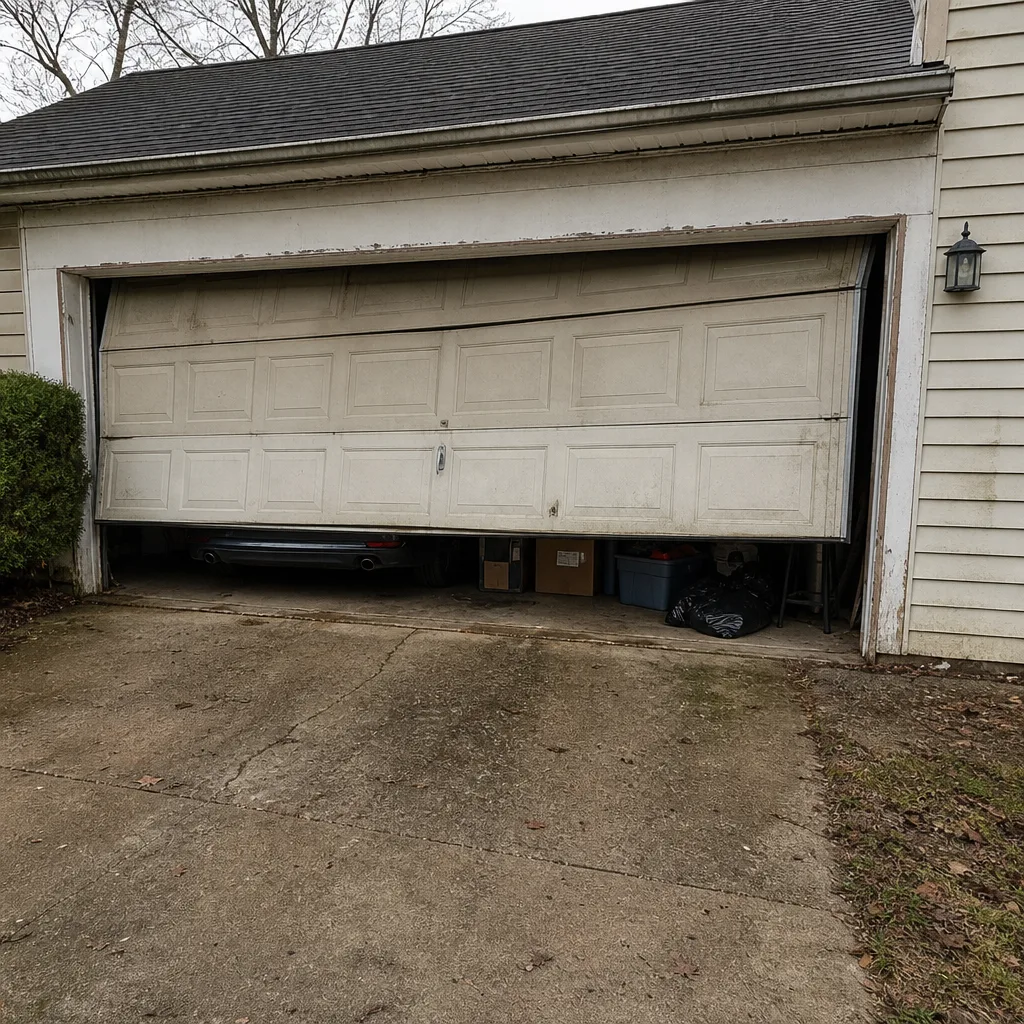 Before
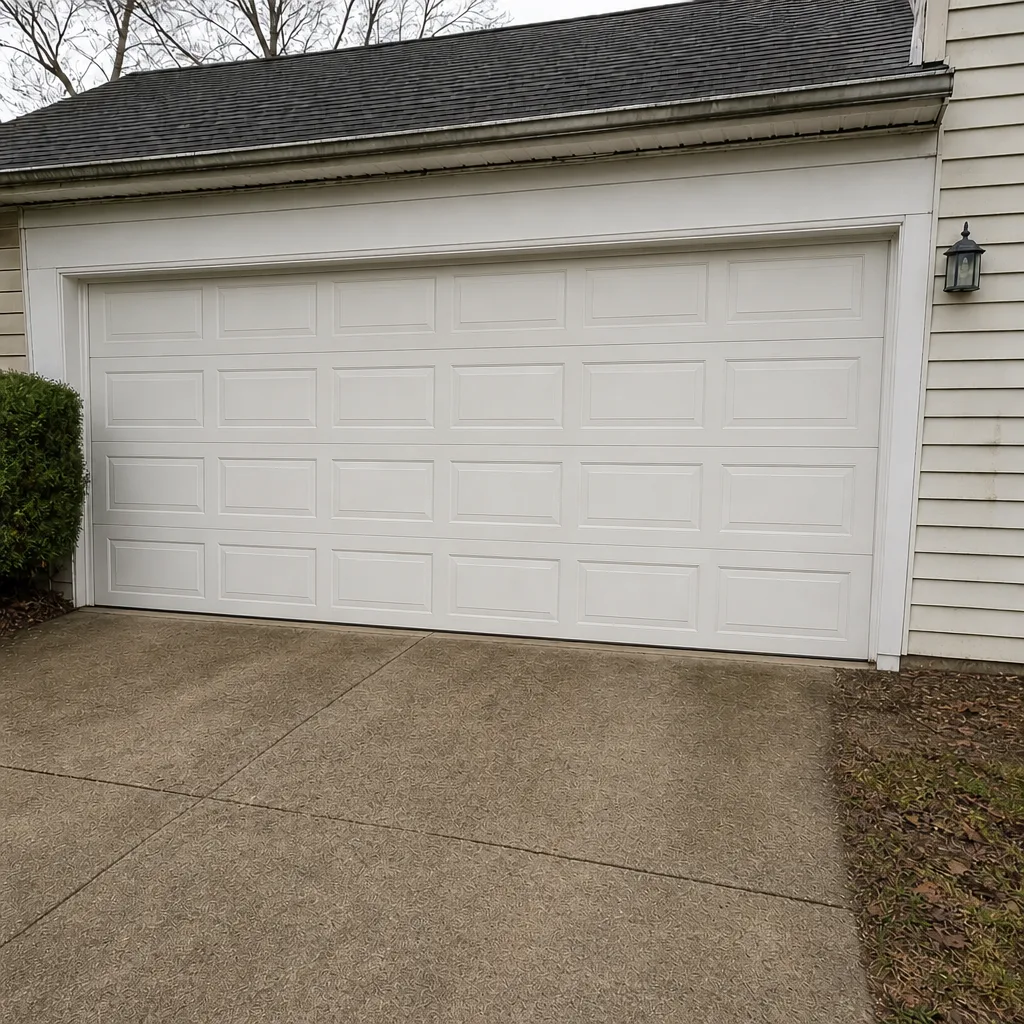 After
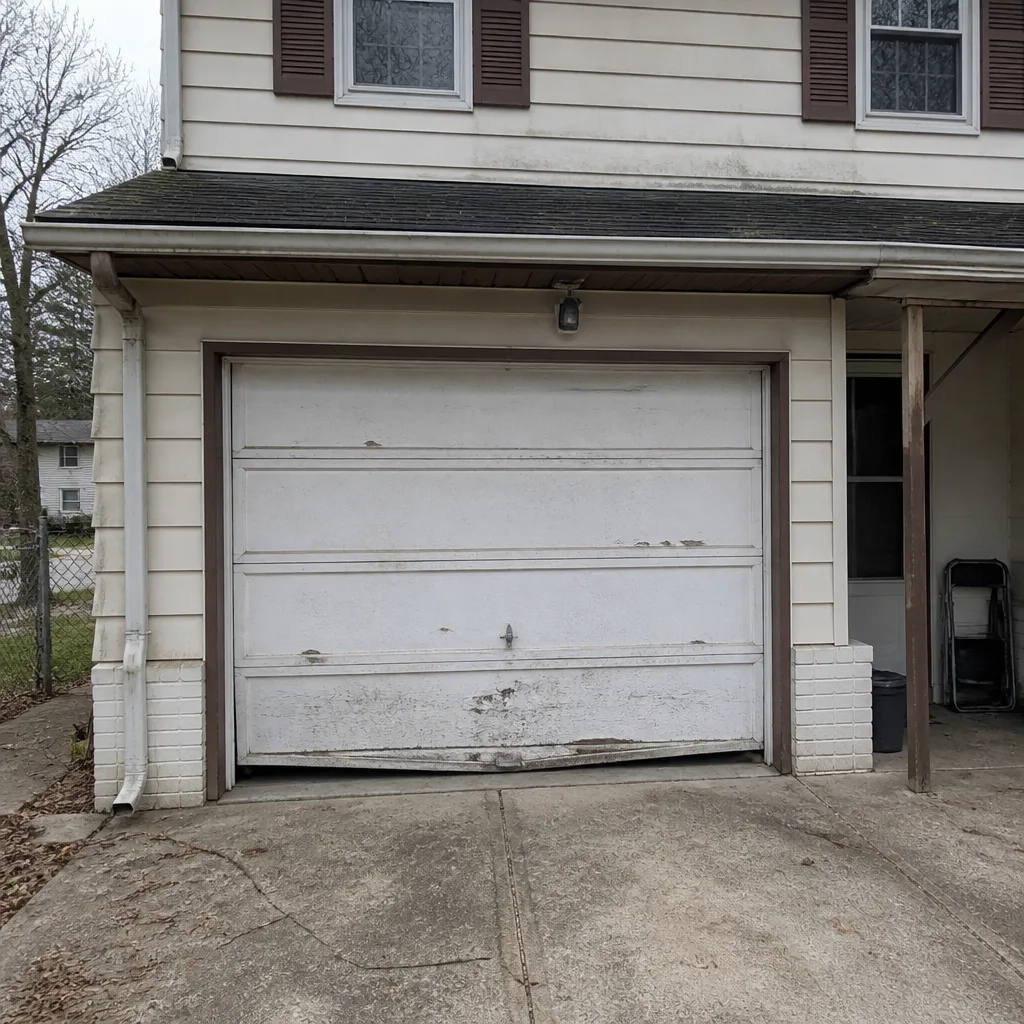 Before
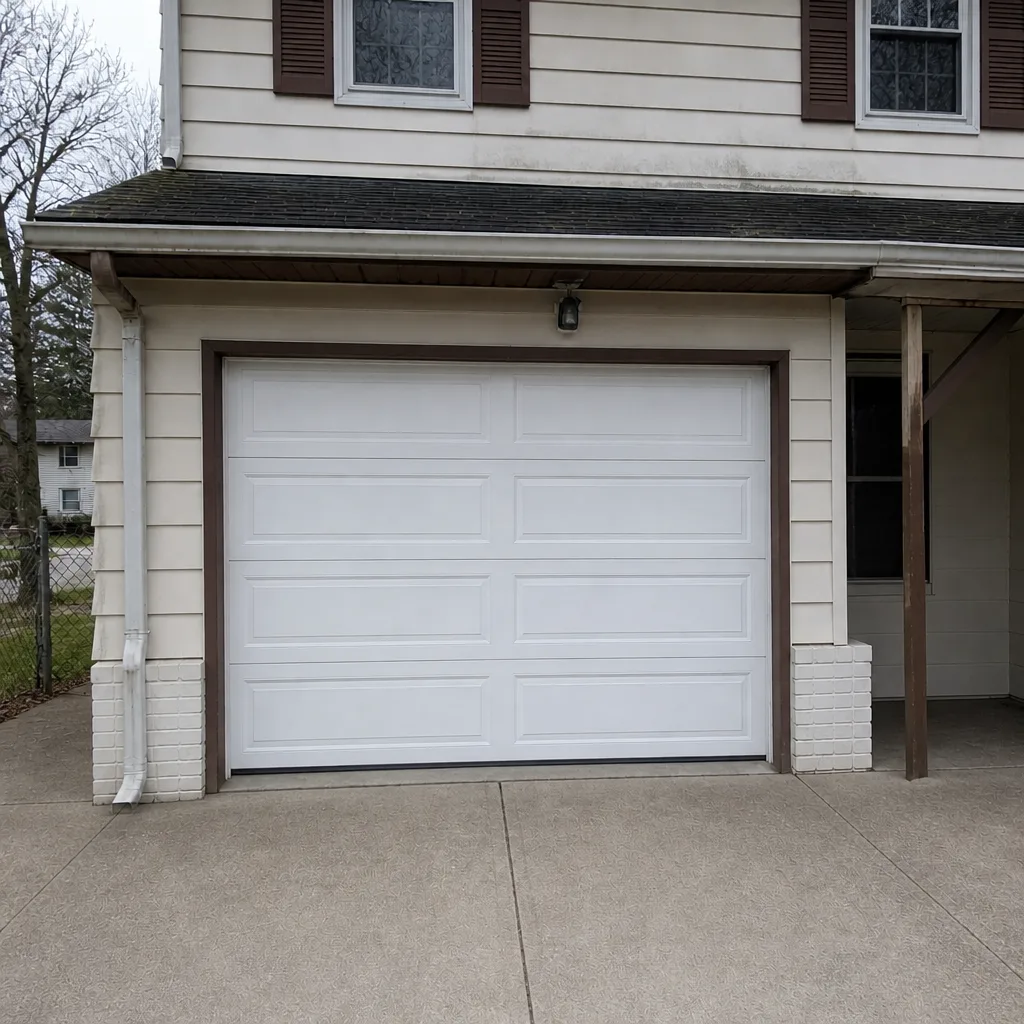 After
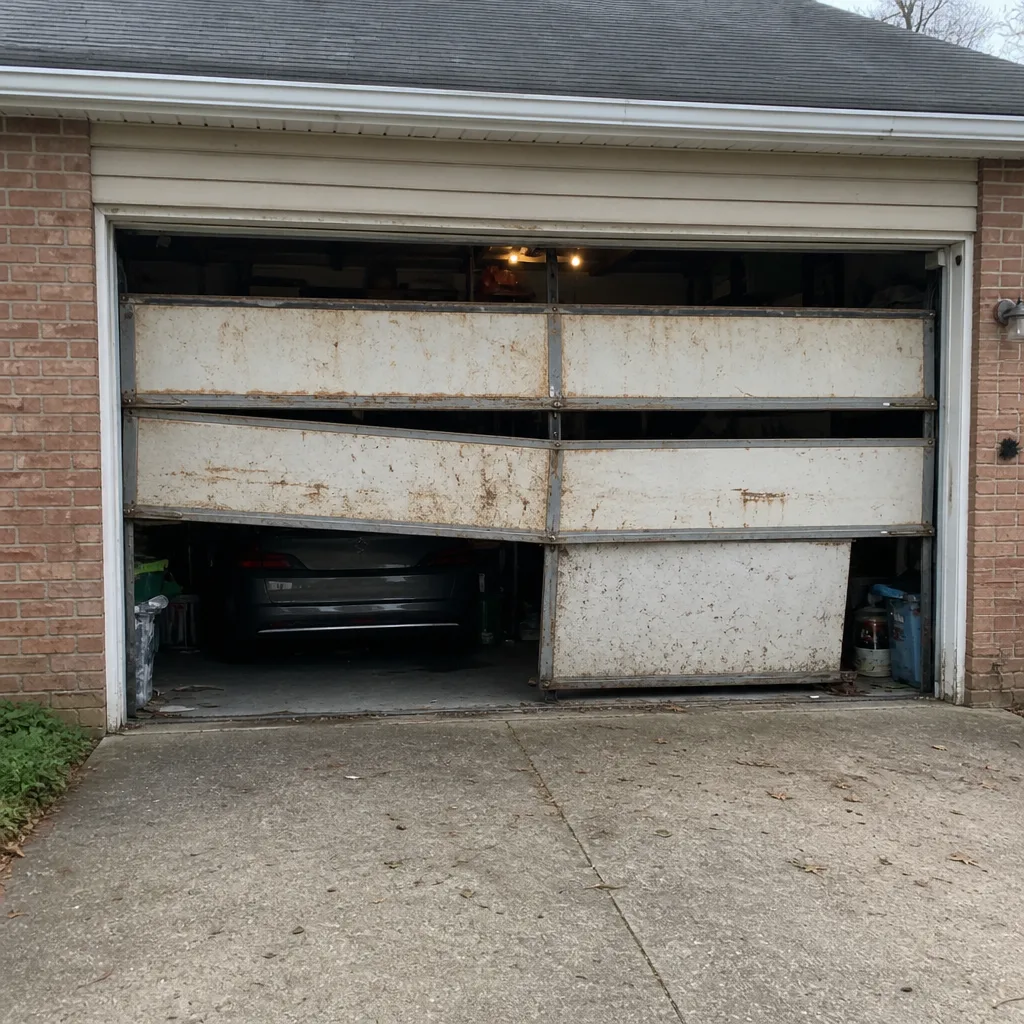 Before
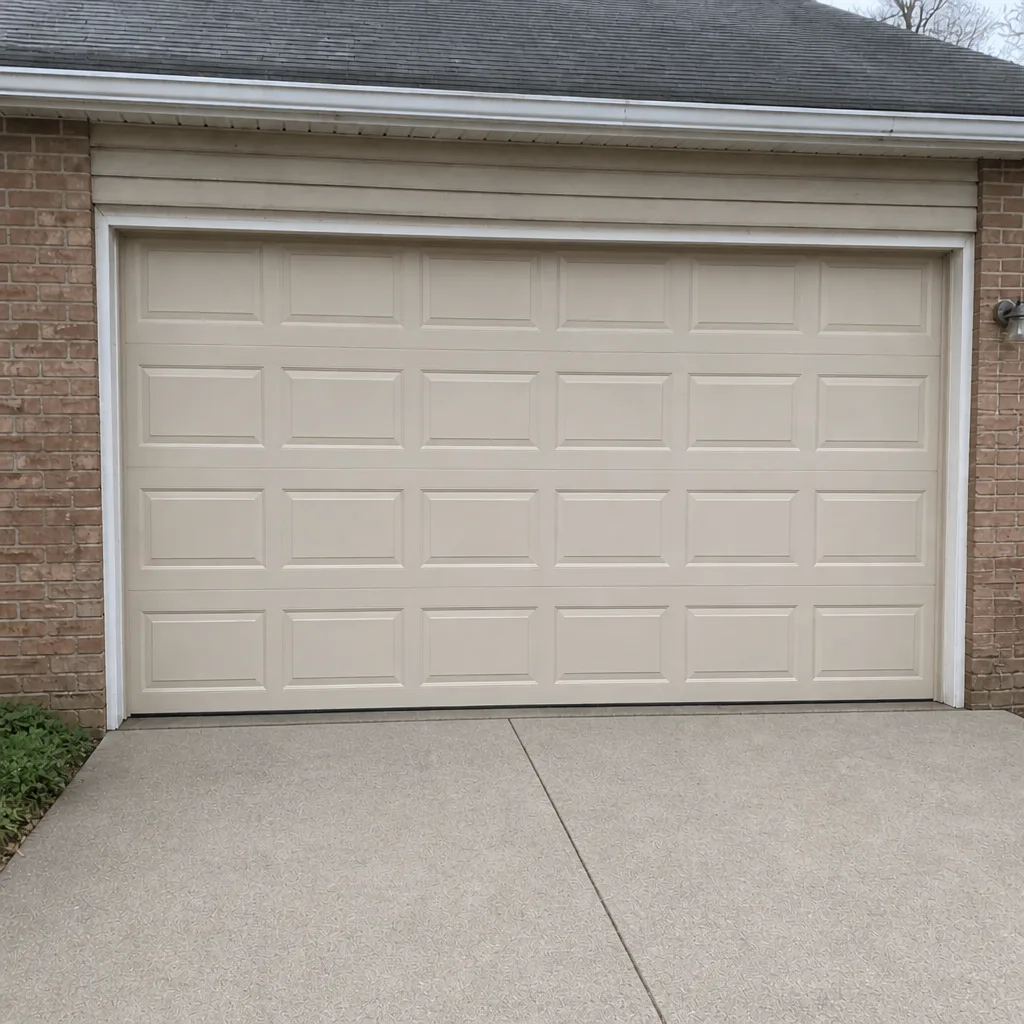 After
When to Call a Professional
Most garage door issues can be handled by a trained technician on a scheduled call. A few situations need immediate attention. A snapped torsion spring, a door that has come off its track and is hanging unevenly, an opener that won’t respond to any remote or wall switch, or a door that’s opened and refuses to close all the way while the house is unattended. Also: any time the door is making a sharp popping or snapping sound, stop using it. A failing spring can damage the door panels, the tracks, and the opener motor if it continues to cycle.
Spring work in particular is not a DIY job. Torsion springs store serious energy and can cause grave injury in a fraction of a second. Cable tension is similarly dangerous. A trained technician has the tools, the torque wrench, and the technique to handle both safely. Our team does this work every day, and we recommend nobody handle it otherwise.
Waldorf Garage Door Repair Co offers free estimates in Waldorf – call (855) 658-4231.
Frequently Asked Questions
Ask the contractor for their MHIC (Maryland Home Improvement Commission) license number, then verify it on the Maryland Department of Labor’s license lookup tool. Confirm the business name on the license matches the name on your estimate and contract, and check the expiration date. If they won’t provide the number, or it doesn’t come up in the database, don’t hire them. Call (855) 658-4231 if you want our team’s license information or have questions about how to verify anyone else’s.
No – spring replacement is home improvement work that requires an MHIC license in Maryland. A handyman without that license is operating outside the rules for this kind of job, which also means you have no state-level recourse if the work fails or someone is injured. Garage door spring replacement should always go to a licensed garage door contractor. Call (855) 658-4231 to get a free estimate from a specialist.
Ask for their MHIC license number and proof of insurance, request the estimate in writing after they inspect the door, ask about the parts and labor warranty, and find out whether they work on your specific door and opener brands. Then ask the spring questions – torsion versus extension, spring gauge, and whether they’ll do a balance check after the repair. A good contractor answers all of these without hesitation. Call (855) 658-4231 to talk through any of these with us.
Single torsion spring replacement typically runs $180 to $340 in the Waldorf market, and extension spring work runs $150 to $300 per spring. A matched pair is usually replaced together, so expect roughly twice the single-spring cost for the pair. Prices are estimates only – the written quote sets the final price. Call (855) 658-4231 for a free estimate on your specific door.
The written quote should be the final price unless the scope changes and you approve it in writing. When the technician inspects the door and issues a quote, that number should hold. If a repair reveals a problem the inspection missed – say, a damaged cable that wasn’t visible – the technician should pause, explain what they found, give you a revised written quote, and only proceed after you approve it. Call (855) 658-4231 if you want to walk through pricing on a specific job.
Yes – emergency service for broken springs, doors off track, and opener failures that can’t wait is a core part of what we do. If your door is unsecured, a car is trapped, or the door won’t close, that’s the kind of situation we want to hear about directly. Call (855) 658-4231 and describe what’s happening so we can help.
The Bottom Line
Hiring a garage door contractor in Waldorf comes down to four things: verify the MHIC license on the state’s lookup tool, confirm insurance, get a written contract with parts and labor warranties, and ask spring questions that reveal real expertise. The rest – quotes, timing, brand capability – follows from those four. Cheaper handymen are cheaper for a reason. When the spring snaps again in six months or a warranty claim gets denied, the money saved disappears and you’re starting over. A licensed, insured garage door specialist costs a bit more up front and saves you real money over the life of the door. For anything involving torsion springs, cables, or an off-track door, the safety call is easy: professional technician, every time.
If you want an estimate or want to talk through what your door is doing, call Waldorf Garage Door Repair Co at (855) 658-4231. We work on the brands already in your garage – Genie, Clopay, Amarr, Wayne Dalton, and more – and free estimates are always available. We’re happy to walk through the license, insurance, and warranty details before any work is scheduled.
Written by the team at Waldorf Garage Door Repair Co.