Last updated November 23, 2026
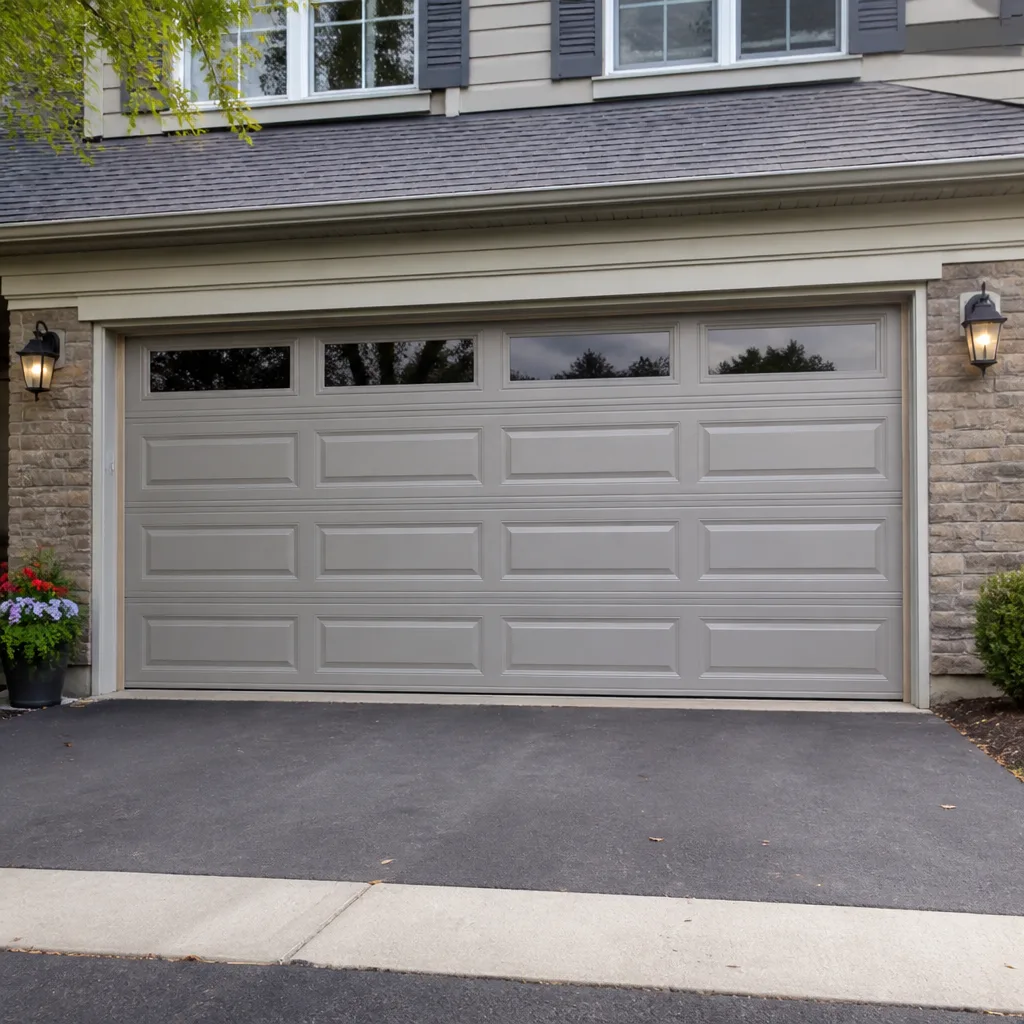 Raised-panel steel
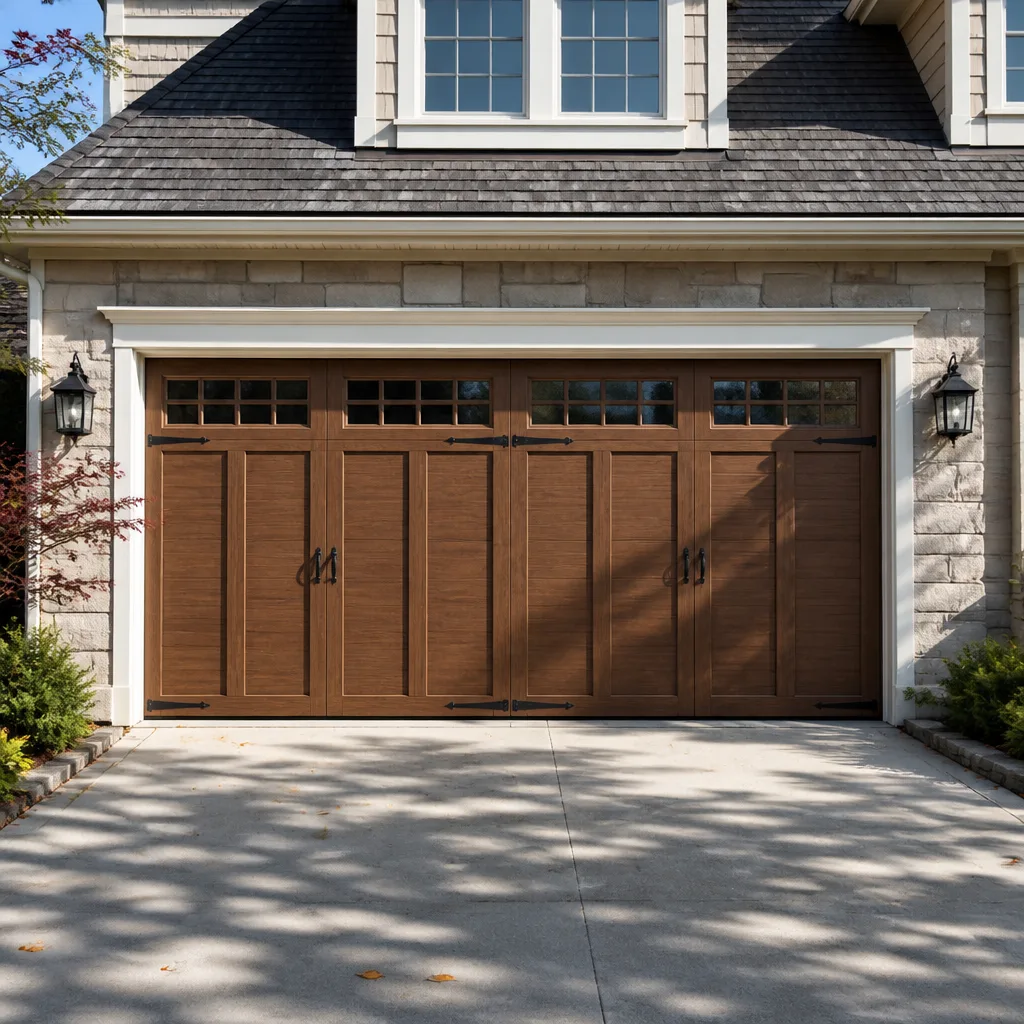 Carriage house
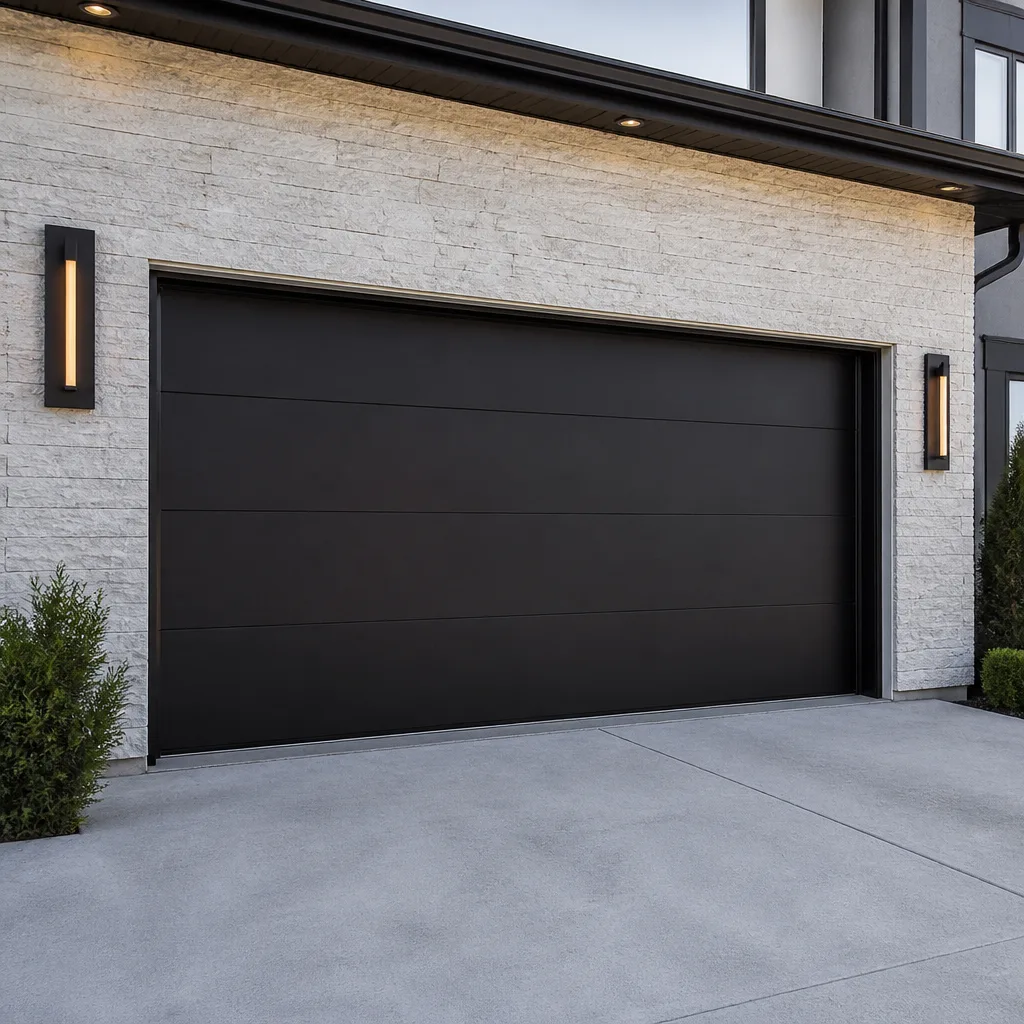 Modern flush
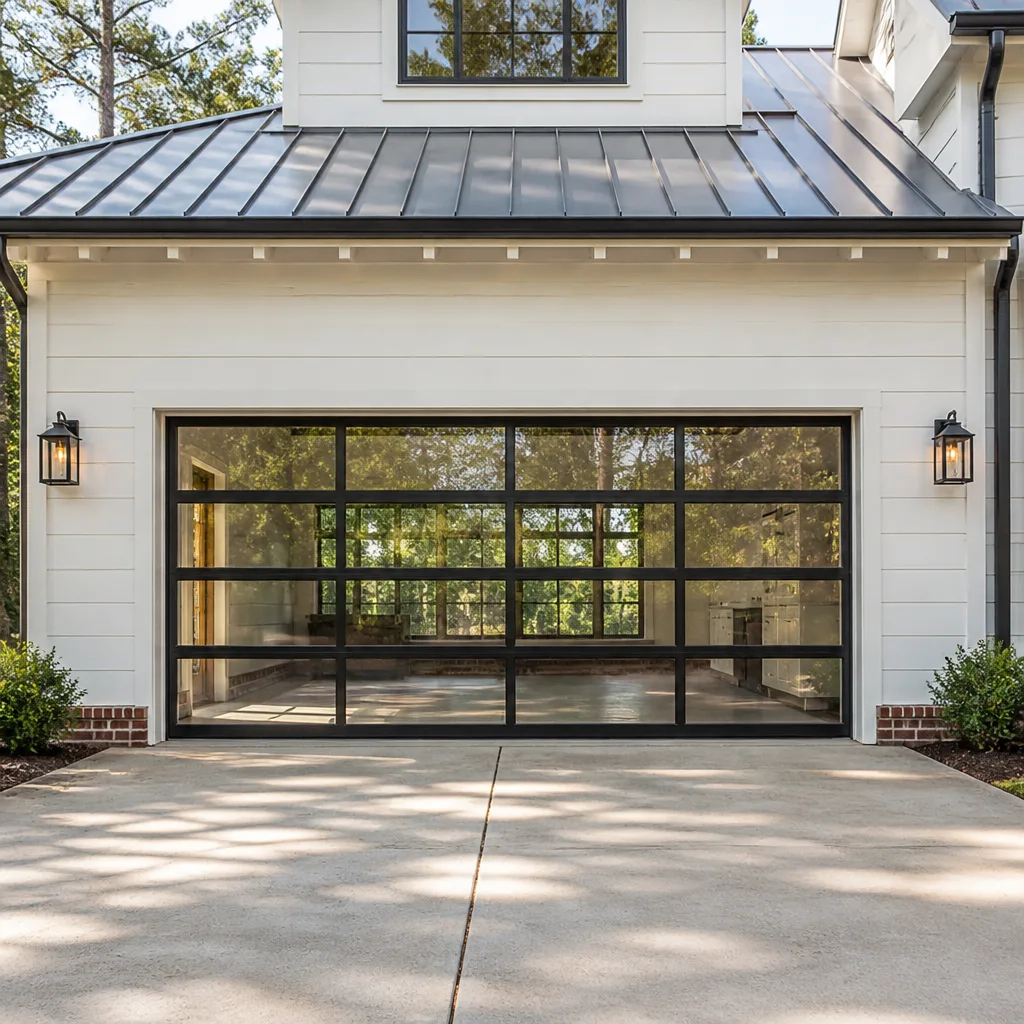 Full-view glass
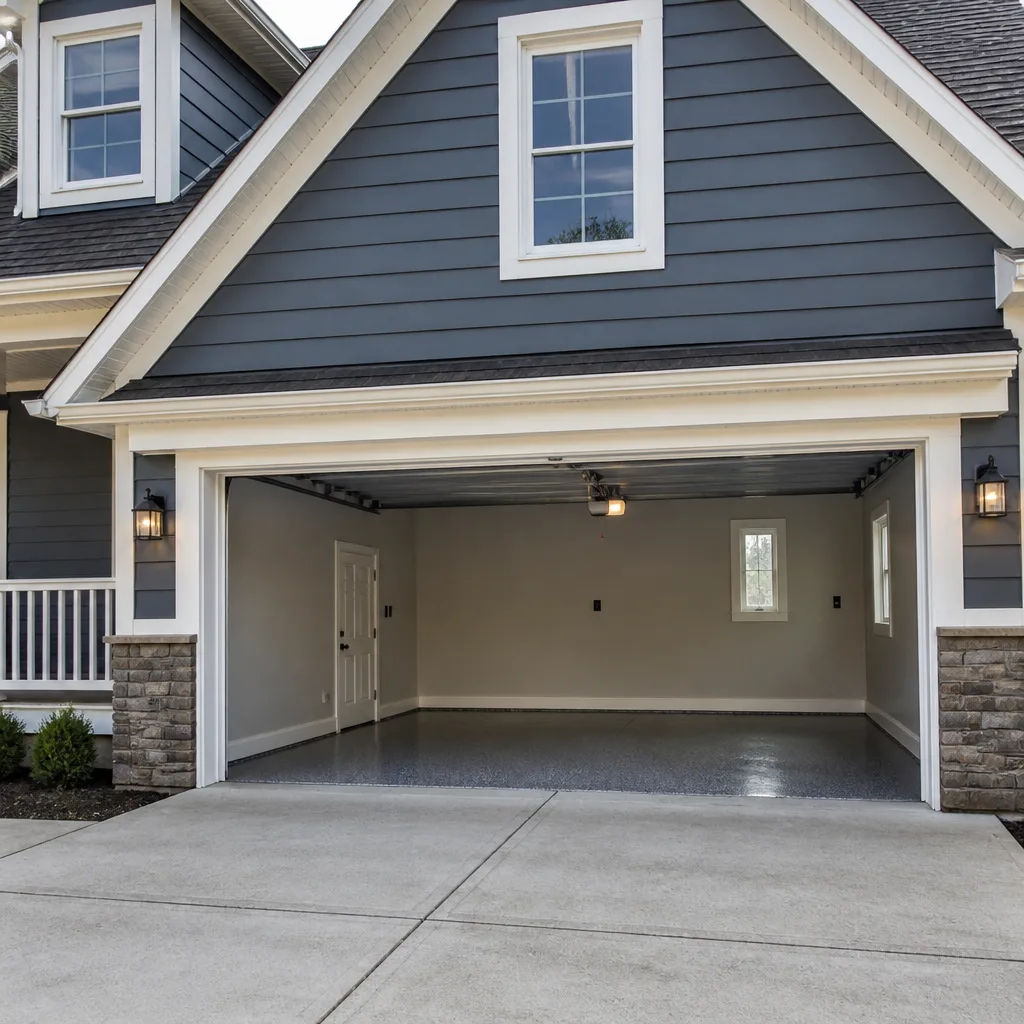 LiftMaster openers
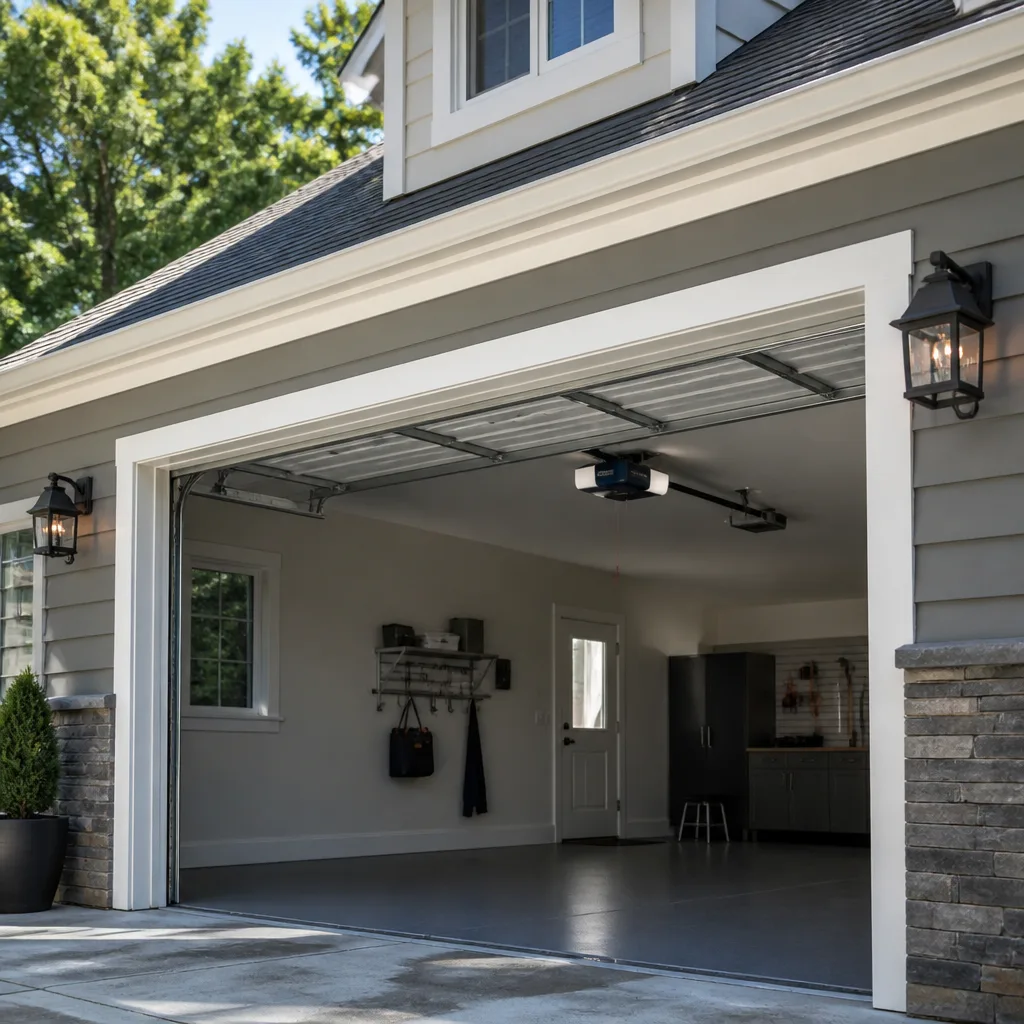 Chamberlain openers
Full 25-point door and opener safety check with every visit - springs, cables, rollers, tracks, and your LiftMaster or Chamberlain opener included
You get a price before we start. It does not change when the pro arrives.
Get your free estimateGarage Door Warning Signs: A Waldorf Homeowner’s Reference Guide
A grinding noise and a slow door aren’t the same problem. One is often a lubrication issue you can handle with a can of garage door spray in a few minutes. The other can mean a cable is fraying on the drum, and a cable that snaps while your car is halfway out is a genuinely dangerous event. Most garage door failures don’t come out of nowhere. They announce themselves first, usually for weeks, in sounds and movements that are easy to dismiss because nobody ever told you which ones matter. That’s the line this guide draws. We’ll walk through what each sound means, which visual cues on springs, cables, and tracks signal a door about to fail versus normal wear, and which warnings mean you should stop using the door today. Written for Waldorf homeowners who use their door every single day.
Quick Answer
Grinding, squealing, popping, and rattling sounds from a garage door each point to a different problem, and only some are cosmetic. A door that’s slow going up but drops fast coming down, a visible gap or kink in a spring, a cable that’s frayed or sitting off its drum, or a door that reverses before it closes all warrant stopping use and calling a technician. Grinding that clears up after lubrication, a light squeak, or a slight rattle are usually normal wear you can address on your own schedule. When in doubt, treat a spring, cable, or track problem as urgent.
Styles & brands we work with
- Raised-panel steel
- Carriage house
- Modern flush
- Full-view glass
- LiftMaster openers
- Chamberlain openers
Table of Contents
- Sound-by-Sound: What Each Noise Tells You
- Visual Signs on Springs, Cables, and Tracks
- How to Tell Your Opener Is Working Too Hard
- The Slow-Up, Fast-Down Problem
- Warning Signs That Mean Stop Using the Door Now
- Warning Signs That Can Wait for a Scheduled Visit
- How Waldorf Conditions Affect Garage Door Wear
- A Simple Monthly Check You Can Do
Sound-by-Sound: What Each Noise Tells You
Your garage door is a mechanical system with a handful of moving parts, and each one makes a distinct sound when it starts to fail. Learning to separate these sounds is the single most useful skill a homeowner can develop, because it lets you describe the problem accurately when you call and helps you decide whether to stop using the door. Here’s the breakdown we walk through with customers across Waldorf.
- Grinding usually means metal-on-metal friction, most often dry rollers, a dry hinge, or a torsion tube that needs lubrication. If the grinding is sharp and comes from one side, it can also mean a roller is seizing or a track is out of alignment. Lubrication often clears the mild version; a persistent grind that survives a spray points to a worn part.
- Squealing is almost always a roller or hinge issue, and it’s the most forgiving of the sounds. A high-pitched squeal that appears after a cold snap in Waldorf is common when factory grease thins out. Clean and lubricate the rollers, hinges, and springs, and most squeals quiet down.
- Popping is the sound that should get your attention. A single loud pop, followed by the door becoming very easy to lift or suddenly difficult to move, often means a torsion spring has broken. Stop using the door immediately and call for garage door spring repair.
- Rattling is usually loose hardware, a worn roller, or a bracket that’s worked itself loose over years of daily cycles. Tighten what you can reach and watch whether it returns. A rattle that gets worse over a week or two is worth a technician’s look.
One sound you won’t find a fix for online is a cable snapping. That’s a warning, not a household task. A frayed or snapped cable means the door can drop without control, so stop using the door and call a professional.
Visual Signs on Springs, Cables, and Tracks
You don’t need to touch anything to spot the visual warning signs on a garage door. You do need to know where to look and what counts as wear versus what counts as failure. Springs, cables, and tracks are the three areas where a quick visual inspection tells you the most. Here’s what to check, in order, from a safe distance with the door closed.
- Look at the torsion spring above the door. A healthy spring is uniform, tightly coiled, and straight. A gap of an inch or more anywhere along the coil, or a kink, means the spring has failed or is failing. A light surface film of rust is cosmetic; a spring visibly sagging under its own weight is not. If the door is open and you see the spring, do not stand under it.
- Inspect the cables on both sides. Healthy cables are smooth, tight, and seated correctly on their drums at the top corners. Frayed strands, a cable that’s come loose from the drum, or a cable that looks slack or crossed over itself means the door is at risk of dropping. Stop using the door and call for garage door repair.
- Check the tracks for bends and gaps. Steel tracks should be straight, evenly spaced, and clean. A bend in the track, especially near the bottom curve, will make the door hesitate or reverse. A door that’s come partly off track can drop, so treat that as urgent.
- Look at the door panels themselves. Sagging panels, a visible gap between sections, or a horizontal crack across a panel often point to a worn hinge or a door that’s been nudged off track. None of this is a DIY fix, but the visible evidence tells you a technician is needed.
- Watch the rollers in their hinges. Worn rollers will look wobbly in the hinge or show flat spots on the wheel. This is normal wear that can be replaced on a scheduled visit.
Spring and cable work is one of the most dangerous tasks in home maintenance. Both are under extreme tension, and a release can cause serious injury. Every visual sign we’ve described in this section should be handled by a trained technician, not by the homeowner.
How to Tell Your Opener Is Working Too Hard
The opener is the brain of the system, but the door is the load. When a door is out of balance, the opener quietly compensates by pulling harder on every cycle, and that’s what shortens motor life. This is why a struggling opener often isn’t an opener problem at all; it’s a symptom of a door that needs adjustment. Waldorf homes with older opener systems built around Chamberlain, Craftsman, or Genie units are especially prone to this pattern, because the motor is often doing more work than the door was designed to demand.
Here are the tell-tale signs your opener is working harder than it should:
- The door stalls or reverses partway and only completes the cycle on a second or third press. That usually means the opener is hitting its force limit due to a door that’s binding.
- The lights on the opener flicker or dim briefly when the door starts. Your motor is drawing more current than it should.
- The opener sounds louder than in the past or you can hear it from inside the house when you used to only hear it from the garage.
- The door takes longer to start moving than it did six months ago.
- The remote only works close-up. Weak signals can point to a failing logic board, especially on smart and Wi-Fi-enabled systems that need brand-specific diagnostics. If the door’s behavior has drifted in ways that don’t make sense, garage door opener repair is where to start rather than replacing the whole opener.
The right response to a strained opener is usually to fix the door, not to buy a bigger motor. A balanced door puts light work on the opener and adds years to its service life.
The Slow-Up, Fast-Down Problem
This is the warning sign most homeowners see and ignore, and it’s the one most likely to catch you off guard. The pattern is simple. The door drags a little on the way up, or hesitates at the halfway point, but it comes back down hard and fast. It gets dismissed as “the door being old” or “the opener being tired.” It shouldn’t be, because this is textbook bad balance.
An overhead door is supposed to be balanced by its springs. The spring tension is calibrated to the weight of the door, so that when the door is halfway open it stays put if you let go of it. That balance is what keeps the door from falling on a person or a car if power or a cable fails. A door that’s easy on the way down and hard on the way up has lost some of its spring tension, meaning the spring is doing less of its job. It’s a slow signal that the spring is weakening, or that it has already failed on one of a two-spring door.
What makes this warning so easy to miss is that the door still opens and closes. The visual problem is subtle. What’s actually happening is more serious. The cable on the balancing side carries uneven load, the opener has been pulling harder for weeks, and the safety margin on the door’s weight has been quietly reduced. That’s the moment before a spring snaps or a cable lets go.
If you notice the slow-up, fast-down pattern, we recommend stopping normal use and having the balance evaluated. In Waldorf, this is one of the most common calls we get, and it’s very often treated in a single visit. The fix is usually a spring adjustment or replacement, not a whole new door.
Warning Signs That Mean Stop Using the Door Now
Some warnings are household tasks. Others are safety calls. The list below is the second group. Any of these signs means the door should not be operated until a technician has looked at it, even if it still opens. Keep the car outside, and use the manual release only if you’ve been told it’s safe to do so by a trained technician, since releasing a broken door with the door up can let it crash down.
- A loud pop followed by the door becoming very light or very heavy. This is the classic broken torsion spring signature. Stop using the door and call a technician.
- A frayed, snapped, or slack cable. A single cable can carry the whole weight of a door if the spring is still tensioned. A failing cable can let a door drop without warning.
- The door is off its track on one or both sides, or a roller has popped out of the track. Do not force it back in yourself; a door partly off track can come down.
- Sagging panels or a visible gap between the door and the frame at the bottom. The door is no longer structurally sound and its safety features may not be reliable.
- A spring that’s visibly kinked or has a gap in the coil. A broken spring halves the balance and leaves the door running with much less margin.
- The door fails to reverse when it hits an object, or the safety sensors don’t respond. That’s a safety system problem, not an inconvenience. Call a technician before using the door again.
- A door that has come down on a car or person, even if it now opens again. That’s a serious sign that the balance, spring, or safety reverse has failed.
In every one of these cases, the right move is the same. Stop using the door, keep people and pets away from it, and call for Waldorf Garage Door Repair Co. If the door is left open and the home unsecured, or a vehicle is trapped, emergency service is available to get the door closed and secured.
Warning Signs That Can Wait for a Scheduled Visit
Not every warning is urgent, and knowing which ones can wait saves you both stress and money. The signs in this section are wear indicators. They deserve attention, but you can schedule a visit on your own timeline rather than dropping everything. If you’re a Waldorf homeowner on a busy week, these are the ones you can add to the to-do list without losing sleep.
- A faint squeak or light squeal when the door moves. It’s usually rollers or hinges, and it’s often fixable by cleaning and lubricating the moving parts. If it doesn’t clear up, a scheduled visit is fine.
- A slight rattle on the way up or down. Loose brackets and hardware are common over time and are best tightened in a full maintenance pass rather than a panic call.
- Grinding that quiets after lubrication and stays quiet for a few weeks. Watch it, and book a visit if it returns.
- Worn rollers or a small cosmetic rust spot on a track or hinge. Neither is a safety issue on its own, but both should be on a maintenance list.
- A door that closes with a slight thud rather than a smooth landing. That can mean the down limit is set slightly off, which is a quick adjustment.
- A light surface film on springs. Cosmetic rust is normal on older doors and doesn’t mean the spring is failing. What matters is coil integrity and spring shape, not the surface color.
When these accumulate, group them into a single maintenance visit. Catching three small problems at once is cheaper and easier than dealing with them one at a time, and it prevents the small wear patterns from turning into the urgent ones above. It’s also the moment to mention any brand-specific quirk, since we work on Amarr, Wayne Dalton, Craftsman, and Raynor doors regularly across Waldorf.
How Waldorf Conditions Affect Garage Door Wear
The weather here works on garage doors in predictable ways, and knowing them changes what counts as a warning sign. Waldorf summers are hot and humid, and that combination works on the metal components. Rollers, hinges, and spring coils go through many small expansion and contraction cycles through the day, and factory lubrication thins out faster than in drier climates. This is why a faint squeak in August is normal in Waldorf and not a problem in a milder region. The fix is usually the same; a proper clean and lubricate routine.
Waldorf winters bring a different set of signals. Cold mornings stiffen factory grease, so doors can sound louder and groggier for the first few cycles. A door that’s still loud after ten minutes of running is telling you something. Cold also works the metal on the springs, and a marginal spring that was hanging on through the fall is more likely to break in the first cold snap. That’s not bad luck, it’s the spring telling you in December what it was already saying in September. Homeowners across neighborhoods like St. Charles, White Plains, and La Plata see the same pattern each season; the door is fine until it isn’t, and the “isn’t” almost always lands on the first cold week.
Spring and fall are also the storm seasons in this part of Maryland. Wind-borne debris and general storm impact can knock a door slightly off track without obvious damage, and the first symptom is usually a door that reverses or rattles. It’s worth a quick look after a heavy storm, especially if the door has panels that took a hit. Hail isn’t a common problem in this area, so most impact damage we see is wind-driven debris, not hail.
There’s one more local factor. Waldorf has a mix of older and newer construction, so the garage door stock is a mix too. Older doors often carry original springs that are overdue for replacement simply by age and cycling, and newer homes have more smart and Wi-Fi opener systems that need brand-specific diagnostics. The warning signs are the same, but the fix is different, and that’s why we work on the brand already in your garage rather than defaulting to a replacement.
A Simple Monthly Check You Can Do
A five-minute check once a month is enough to catch most of the warning signs in this guide before they turn urgent. It’s not a replacement for professional maintenance, but it’s the difference between a homeowner who calls at the first sign and one who calls after the spring has already snapped. Here’s the routine we recommend for Waldorf homes, in order.
- Listen before you look. Run the door once and just listen. Note any grinding, squealing, popping, or rattling. Match the sound to the chart in the section above.
- Watch the balance. With the door closed, use the manual release only if you’ve been taught to do it safely, or simply observe the door on open and close. It should rise smoothly and lower at a similar pace. A slow-up, fast-down pattern is your signal.
- Inspect springs from a distance. Door closed. Never stand under a torsion spring. Look for gaps, kinks, or sagging in the coil.
- Check the cables at the top corners. Look for fraying and for cables that are off their drums. Don’t touch them.
- Look down both tracks. Bends, gaps, and debris in the curve at the bottom are all worth noting.
- Test the safety reverse. Place a small object in the door’s path and confirm the door reverses. If it doesn’t, stop using the door and call.
- Lubricate what’s safe. A garage door lubricant spray on rollers and hinges quiets a lot of small issues. Never try to lubricate or adjust springs yourself.
If a monthly check turns up something you’re unsure about, a photograph and a phone call is often enough for a technician to tell you whether it can wait or needs a visit. For anything involving springs or cables, call and stop using the door until you’ve spoken to someone.
Common Mistakes to Avoid
- Treating every noise as urgent. Most grinding and squealing is treatable with lubrication, and panicking over normal wear leads to unnecessary service calls. Match the sound before you react.
- Ignoring the slow-up, fast-down pattern. It looks like age and it’s actually a balance problem. In our experience, this is the most common warning Waldorf homeowners sit on for months.
- Trying to fix a broken spring or a frayed cable yourself. Springs and cables are under extreme tension, and this is where serious injuries happen. Call a trained technician; it’s not a household task.
- Replacing the opener before diagnosing the door. A struggling motor is usually the door’s fault, not the motor’s. Diagnose the door first, and you’ll often save the cost of a new opener.
- Forcing a door that’s off track back into place. A partially off-track door can drop on you. Leave it alone and call.
- Skipping lubrication in humid Waldorf summers. The local humidity works the moving parts harder than in drier climates. A simple spray routine prevents a lot of avoidable squeals.
- Waiting for a spring to break instead of scheduling a balance check. Springs are consumable parts. A balance check on a scheduled visit is far cheaper than an emergency call on a cold January morning.
See the difference
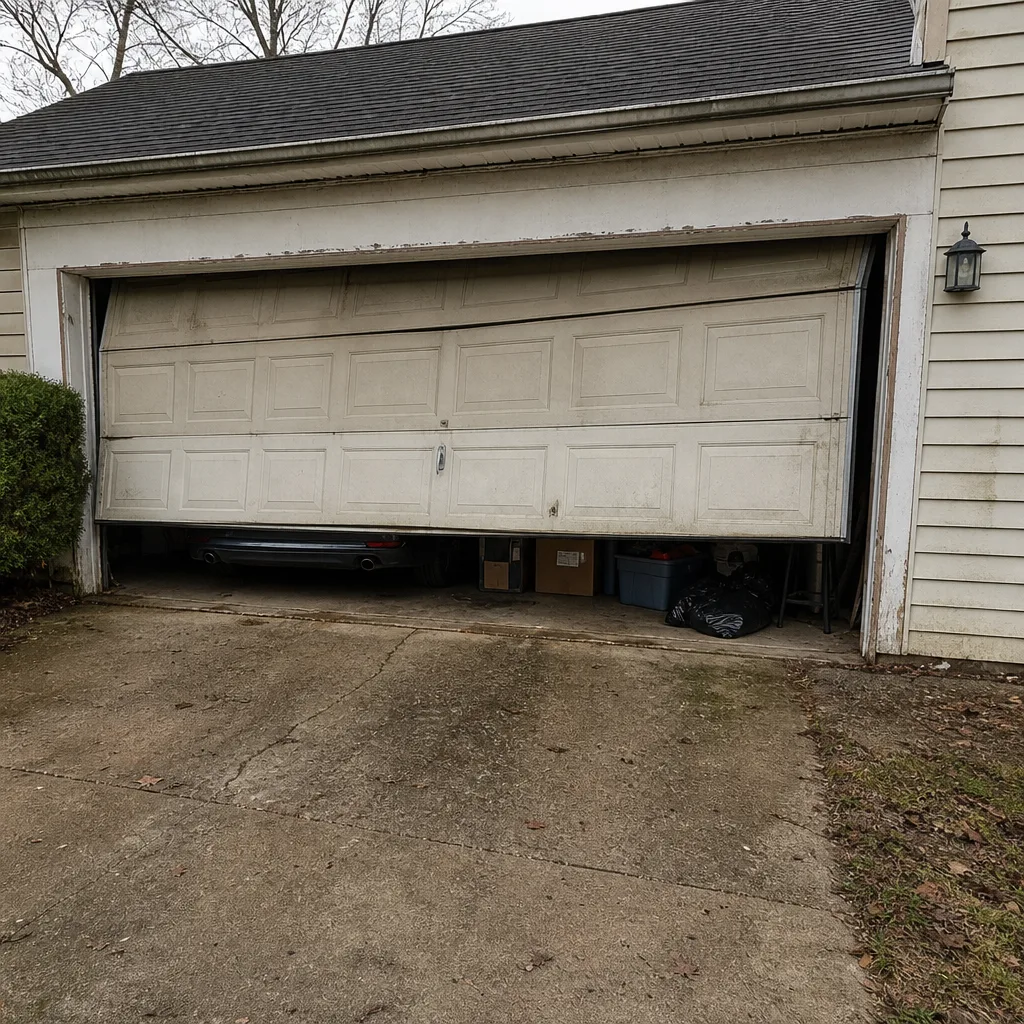 Before
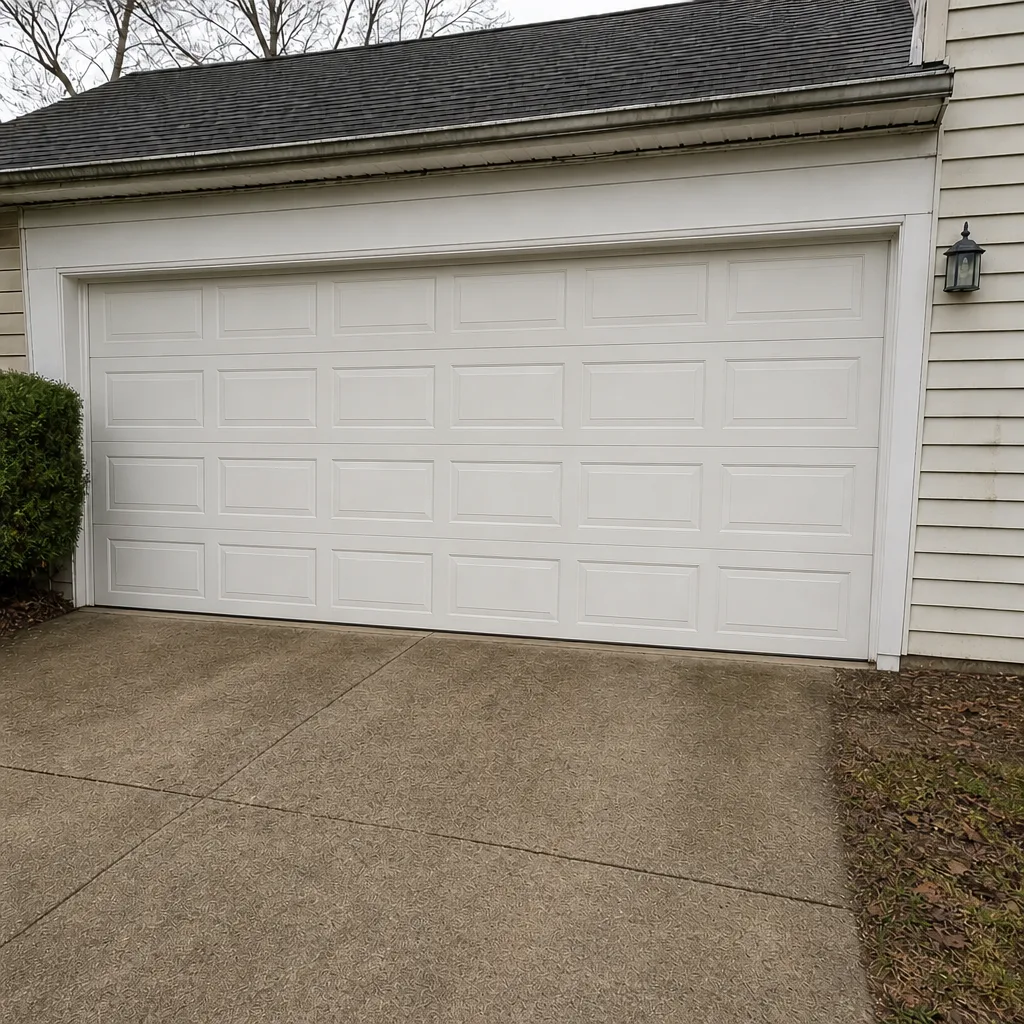 After
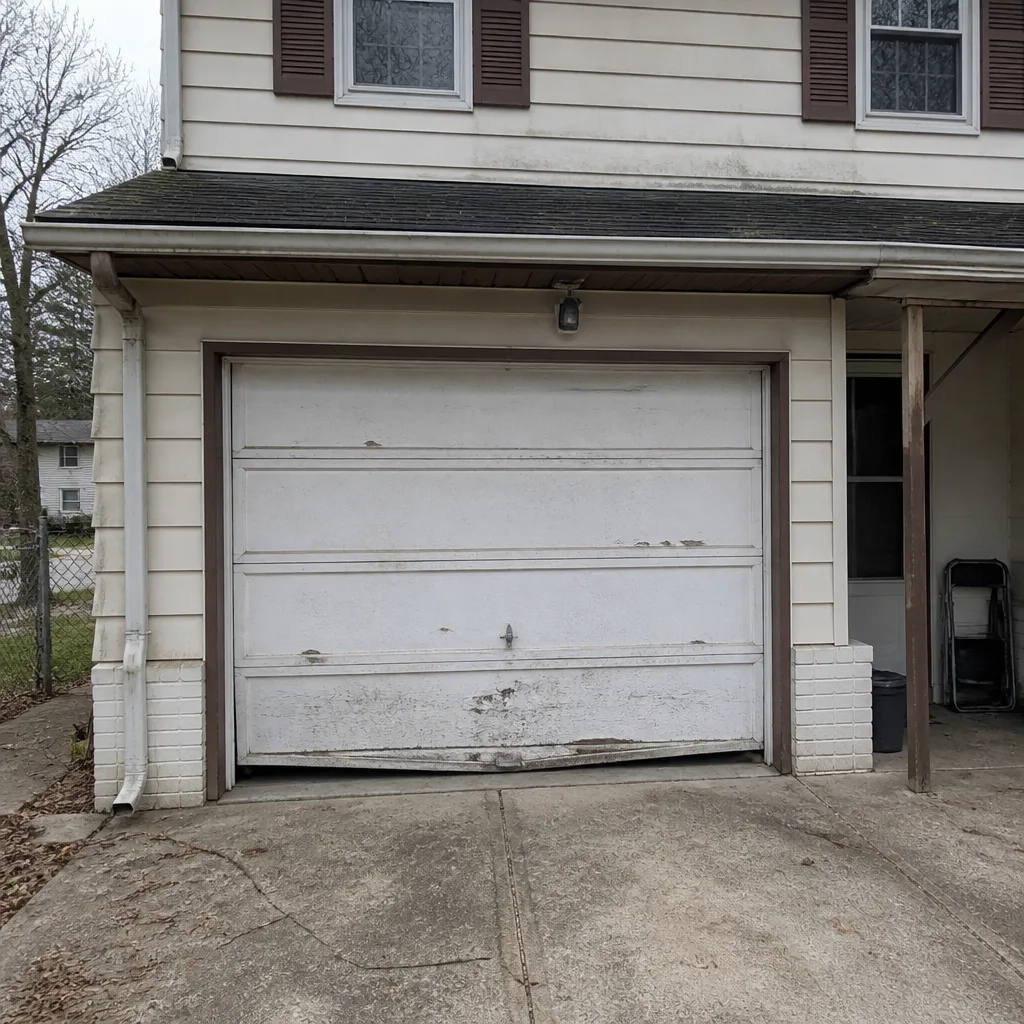 Before
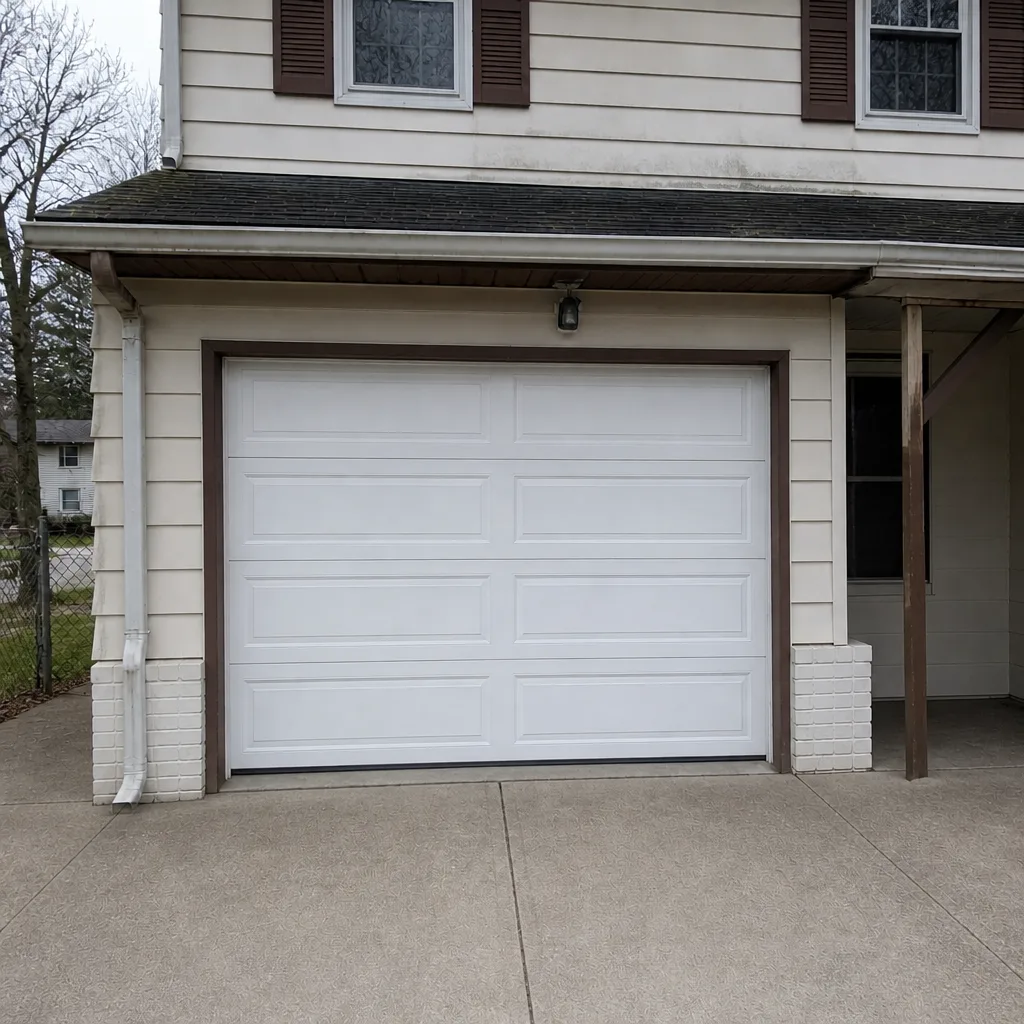 After
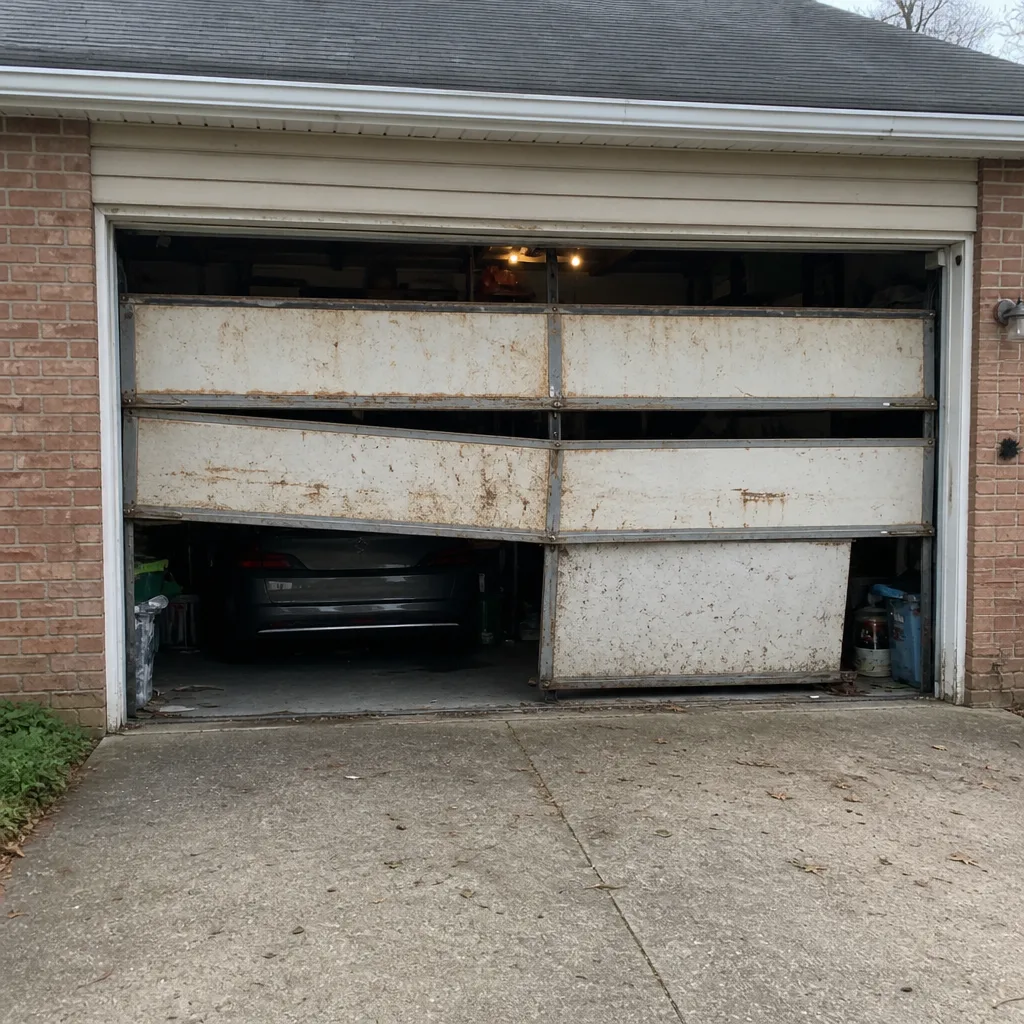 Before
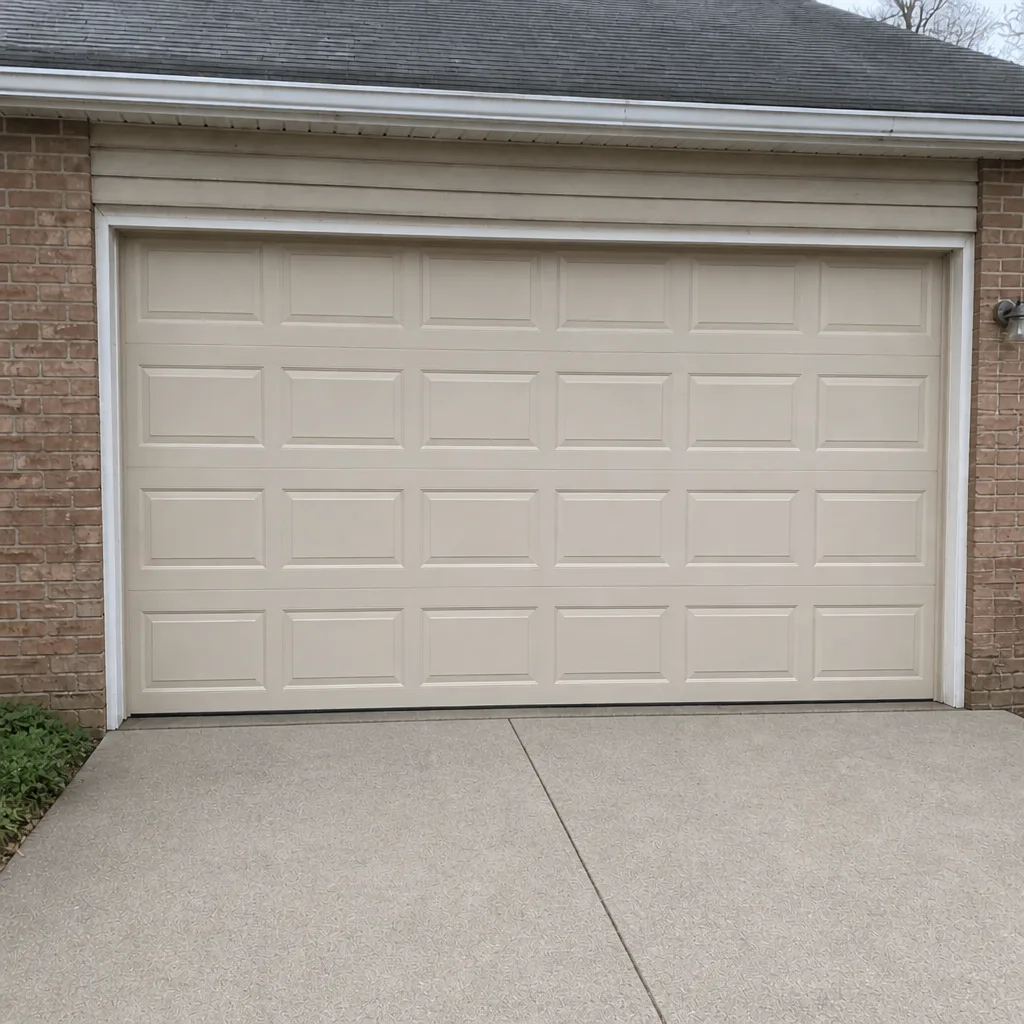 After
When to Call a Professional
Call a professional any time a warning sign involves a spring, a cable, a track, or a safety reverse function. Those four components are what keep the door balanced, controlled, and safe, and none of them are household tasks. Call sooner if the door is stuck open, off its track, or has hit a person or vehicle. A grinding noise that survives lubrication, a strained opener that’s louder than it used to be, or a slow-up/fast-down pattern all warrant a scheduled visit rather than an emergency, but they should not go ignored for longer than a couple of weeks. Waldorf Garage Door Repair Co offers free estimates in Waldorf. Call (855) 658-4231 and we’ll help you decide whether your warning sign is cosmetic or urgent. The price is quoted and agreed before any work starts.
Frequently Asked Questions
The most commonly missed sign is the slow-up, fast-down pattern. The door looks normal because it still opens and closes, but it’s actually a balance problem. Treating it as normal wear is what turns a small fix into an emergency call. If you notice it, call (855) 658-4231 for a balance check – estimates are free.
Grinding that quiets after you clean and lubricate the rollers and hinges is usually normal wear. Grinding that’s sharp, persistent, or comes from one side of the door is more serious, and often points to a seizing roller, a worn part, or a track that’s out of alignment. In either case, don’t force the door if it stalls; call for an evaluation.
Yes. A door that’s visually intact can still be one cycle away from a snapped spring or a dropped cable. The two most reliable signs are the sound of the door and its balance. If the door has become harder on the way up than the way down, or if the opener sounds louder than it used to, the door is telling you something even if nothing looks wrong.
Yes. Torsion and extension springs and the cables connected to them are under extreme tension, and a mistake can cause serious injury. This is one of the most dangerous and commonly botched DIY jobs in home maintenance. All spring and cable work, including diagnosis, should be handled by a trained technician.
Yes. Waldorf’s hot, humid summers work the moving parts harder and thin out factory lubrication, so quiet periodic checks are worth doing in the summer. Cold snaps in winter tend to be when marginal springs finally break, so it’s worth watching the door closely in the first cold week of the year. The monthly check routine in this guide is the same all year, and it’s what catches the signals before they turn into emergencies.
Small problems tend to become bigger ones. A worn roller that gets ignored wears the track. A strained opener that’s ignored shortens motor life. A marginal spring that’s ignored is more likely to break in a cold snap. In the worst case, a door that’s ignored while off track or running with a failing cable can drop, which is a genuine safety risk.
We work on the brand already in your garage. Our technicians are certified across eight major brands, including Amarr, Wayne Dalton, Craftsman, and Raynor, so they arrive familiar with the exact system in your garage. If you’re not sure what brand your door or opener is, mention it when you call and we’ll help identify it.
Spring repair is priced per spring based on the door and the spring involved, and we give you a written estimate before any work starts, so there’s no surprise on the invoice. Call (855) 658-4231 for a free estimate on your specific door.
The Bottom Line
Most garage door failures don’t happen without warning. They happen because the warning signs are easy to miss or easy to dismiss, and this guide is meant to close that gap. Separate the sounds: squealing and light rattling are usually wear you can handle, while a pop or a persistent grind is often a spring or part on its way out. Watch for the visual cues on springs, cables, and tracks and treat spring, cable, and track problems as urgent, while cosmetic wear can wait for a scheduled visit. The slow-up, fast-down pattern is the one Waldorf homeowners ignore most. When you see it, or any of the signs in this guide that point to a spring or cable, stop using the door and call a trained technician.
If you’re in Waldorf and want a technician’s look at your door, call Waldorf Garage Door Repair Co at (855) 658-4231 for a free estimate. We can help you tell cosmetic wear from an urgent problem, and the price is quoted and agreed before any work starts.
Written by the team at Waldorf Garage Door Repair Co.